
Biomarker test improves Alzheimer's diagnostic accuracy—should you or your loved one get screened?
A blood biomarker test for Alzheimer’s disease was approved by the Food and Drug Administration well over a year ago, in May 2025, but according to medical professionals and advocacy organizations like the Alzheimer’s Association, there is still a significant public knowledge gap.

By Pamela Appea
A blood biomarker test for Alzheimer’s disease was approved by the Food and Drug Administration well over a year ago, in May 2025, but according to medical professionals and advocacy organizations like the Alzheimer’s Association, there is still a significant public knowledge gap. Many people know that Alzheimer’s is a serious disease, but do not necessarily know about the option of the blood biomarker test or which steps to take before or after receiving a diagnosis.
New research shows the blood biomarker test allows both primary care doctors and medical specialists to accurately identify biomarkers of individuals with Alzheimer’s disease, leading to earlier diagnoses.
“Blood-based biomarkers are reshaping how we identify and understand Alzheimer’s disease,” said Maria C. Carillo, Ph.D., Alzheimer’s Association chief science officer and medical affairs lead, in a 2025 statement released by the Alzheimer’s Association. “At the same time, there are important questions for healthcare professionals to consider; in particular, who should be tested and when?”
According to research published in Alzheimer's & Dementia: The Journal of the Alzheimer’s Association, an estimated 7.2 million Americans age 65 and older live with clinically diagnosed Alzheimer's. The number of impacted individuals could increase to over 13.8 million by 2060.
Individuals of color are more likely to be diagnosed later. According to the Alzheimer's Association, Black Americans who are aging in place are twice as likely to have Alzheimer’s or another form of dementia. Hispanic Americans, ages 65 and up living in the United States, are 1.5 times more likely to have a form of dementia than white Americans.
Identifying the disease early could mean earlier treatment. With an early diagnosis, individuals are more likely to get the chance to be an active participant in their medical care decisions.
“The sooner you diagnose Alzheimer's … the better your outcomes are, because the medications work better at the early stages. They stop working when the illness progresses,” said Dr. Nikhil Palekar, director of the Stony Brook Center of Excellence for Alzheimer's Disease and division director for geriatric psychiatry at Stony Brook University Hospital in Long Island, N.Y.
Diagnosing Alzheimer’s earlier than ever
When actor Danny Glover, 79, revealed an Alzheimer’s diagnosis last month in a pre-recorded TODAY television segment, hundreds of thousands of people shared their admiration for the actor via social media, along with posts about their personal experiences of seeing a loved one battle the disease.
Glover is part of a wave of high-profile figures who have started publicly sharing their Alzheimer’s diagnoses, including “Miracle on the Hudson” pilot Captain Chesley “Sully” Sullenberger III and New York’s WABC-TV Eyewitness News anchor Bill Ritter. Sharing an early diagnosis–while obviously not required–can raise awareness and decrease stigma.
Previously, individuals with a dementia diagnosis (and their families) may have chosen to keep the medical condition secret or not publicly addressed the issue. It’s not just a celebrity issue–countless individuals are choosing to get early screening tests, some individuals are getting an early diagnosis.
“The picture of someone with Alzheimer's disease has changed drastically. In the past, when we think of someone with Alzheimer's disease, we think of someone in a nursing home needing total assistance with hygienic care, needing to be fed and very frail, but … now, we're seeing patients diagnosed [early] with Alzheimer's disease, and they're still working,” said Dr. Margarita Reyes, a dementia and Alzheimer’s care specialist and certified hospice medical director at Bristol Health Medical Group’s Live Well center in Bristol, Connecticut. “In fact, now you'll meet a lot of patients with Alzheimer's disease, and even in my practice, wherein you would not be able to guess that they actually have the disease, because they're functioning very well,” she said.
What is the blood biomarker test?
There are a range of blood biomarker tests that are intended for screening, not making a standalone diagnosis. The standard screening tests look for the presence or absence of different proteins, including the presence of amyloid plaque.
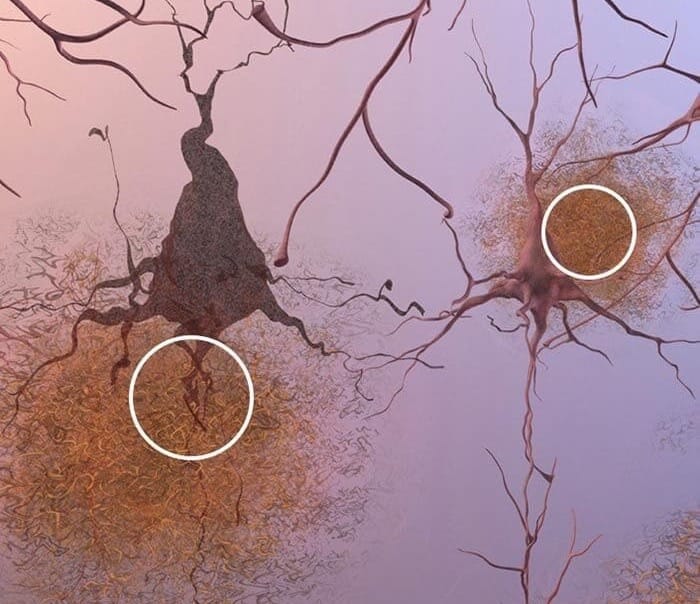

“If the biomarkers are elevated, it strongly indicates that you might have amyloid plaque building up in your brain,” said Palekar. “The presence of amyloid plaques in the brain is the … standard for diagnosis of Alzheimer's disease.”
"The biomarker blood screening is not a replacement for an Alzheimer's diagnosis," he said.
Palekar stressed the biomarker blood test is a screening test, not a standalone test for an Alzheimer's diagnosis. Individuals should be aware specialists will typically schedule a battery of other tests, in addition to the biomarker test. In most medical specialist settings, individuals will continue to be given the option to have the standard PET scan or lumbar puncture test, along with a full battery of neuropsychological tests that are required for diagnosing Alzheimer’s or other forms of dementia.
Additionally, the biomarker test is only for screening for Alzheimer’s disease. An individual can potentially have more than one form of dementia, so additional testing may be required.
Who should get the blood test?
Medical doctors and experts say the current recommendation is to get a blood biomarker screening test, if you have experienced increasing memory or cognition issues. If an individual has a family history of Alzheimer’s, that does not always mean an individual will definitely develop dementia–but it does mean there is a higher risk. With that said, insurance coverage of the blood biomarker test is not currently covered in the case of any individuals with no memory or cognition issues.
“The Centers for Medicare and Medicaid (CMS) services have started to cover this test, but they're [currently] only covering people who have some symptoms," said Palekar. If an individual with no symptoms wants to take this test, they typically will have to shoulder the out-of-pocket costs, he said.
There are several different factors to consider before scheduling a biomarker test, including whether health insurance companies, life insurance companies, or even your employer may be able to access your medical or billing records. Palekar recommends scheduling an appointment with your primary care doctor first, then connecting with one or more specialists in a traditional medical setting for in-person appointments where a patient's medical privacy is paramount.
In contrast, when it comes to commercial "brain" blood testing products available online, there may be a greater potential for privacy or ethical concerns. Newer commercial companies are not regulated in the same way or upheld to the same privacy standards, as compared with medical professionals working at hospitals and medical centers, per AARP news reports.
Caregiving and early Alzheimer’s disease/dementia
Barbara Weiss, a Long Island, N.Y., resident is a caregiver for her mother who has late-stage dementia. Weiss’s husband Dennis Weiss was recently diagnosed with Alzheimer’s. Barbara Weiss recently took a whole battery of tests after experiencing some memory/cognition issues herself. She figured if the tests found anything, she could start treatment and slow the disease’s progression.
“I've done the neuropsych, I did the brain metabolic PET scan, and I did the PET scan for amyloid plaque,” said Weiss. “The earlier you make that appointment… get [screened], the earlier you get a diagnosis and the earlier you get treatment, [the greater chance] you can preserve your brain cells and the functioning you have.”
All of Weiss’s tests for Alzheimer’s or other forms of dementia came back negative, although she did get a diagnosis of Attention Deficit Disorder (ADD). Given her family history of dementia and her husband’s diagnosis of Alzheimer’s, Weiss said it made sense to take the tests—she just wanted to know.
What insurance plans offer coverage for the biomarker test? What are out-of-pocket costs for those who have no insurance coverage?
Some individuals with either Medicaid and Medicare may qualify for a screening test fully covered by insurance. Currently out-of-pocket costs for the biomarker screening tests vary, but range from $100-$200 and up. For more information about blood biomarker coverage, in your state, consult with your doctor, a healthcare professional or your health insurance provider.
In the future, absolute full insurance coverage is less certain; introduced legislation is potentially in the works. According to a spokesperson for the Alzheimer's Association, expanding health insurance coverage of the biomarker screening test is one of the organization's top legislative and advocacy priorities nationwide.
According to an Alzheimer's Association's advocacy information fact sheet, currently fewer than 10% of individuals receive a diagnosis of Alzheimer’s disease when they have mild cognitive impairment. Nearly 4 in 5 of individuals surveyed told the Alzheimer’s Association they would want to know their Alzheimer’s diagnosis while symptoms are still mild or before symptoms appear at all. The majority of surveyed individuals also said they would want the option for an Alzheimer's test to allow for early treatment.
Medical Disclaimer
All content available on and through Health Nation Media is for informational purposes only. Such content is not an endorsement of, or a substitute for, nor does it replace, professional medical or veterinary advice, diagnosis, or treatment. If you have any concerns or questions about your or others' health or the content available on or through Health Nation Media, consult with a healthcare professional. Do not disregard, avoid, or delay obtaining health-related advice from a healthcare professional because of content available on or through Health Nation Media. Use of Health Nation Media and reliance on any Health Nation Media information is solely at your own risk. For more details, see Health Nation Media's Terms of Use.