
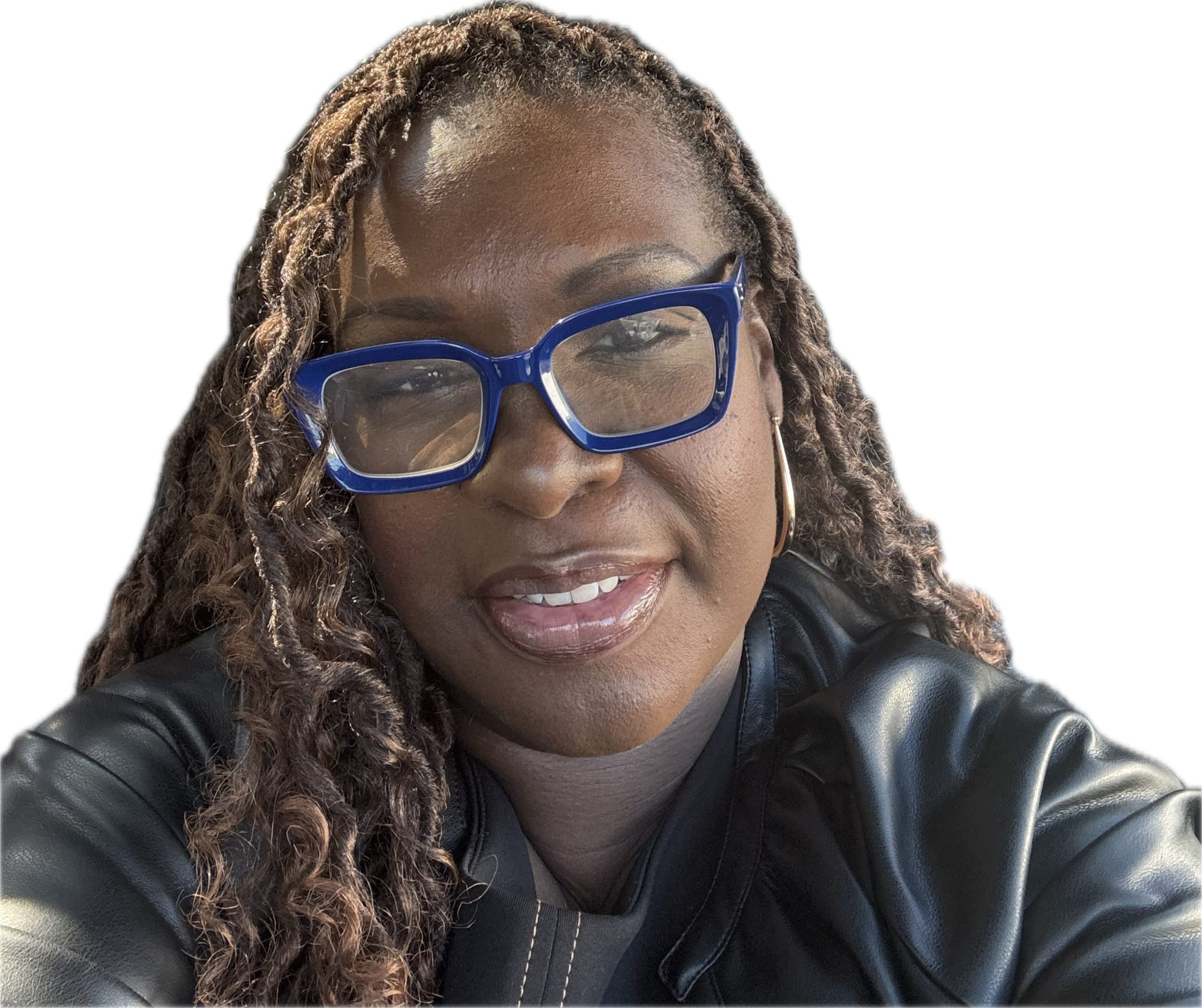
Doris Phildor on caring for her aging immigrant mother in Brooklyn
My mother, Paulette, and my dad, Edwidge, came to America from Haiti in the ’70s. My mother was very well educated. She actually used to be a teacher in Haiti. We used to run into people who were her students all the time.
Q: Can you tell me about your caregiver journey?
A: My mother used to manage the susus in our family. [A susu is] how many West Indian families pooled money to save. She was the susu leader for many years and she started having real trouble managing it.
Q: Can you explain that more?
A: My mother, Paulette, was the numbers person. She was good with managing money and she was great with mental math and calculations. You don't question her numbers. (laughs)
She started having issues with the susu in terms of remembering whose turn [which member had already contributed] or how much money each person was supposed to contribute or receive. She started having to really rely on her notes. I noticed because this was a shift. I took it as she's getting older.
It's kind of one of those … when you look back, you're like, “Oh, that's what it was.”
That was the beginning of it.
Q: What were some additional signs of your mother’s Alzheimer’s?
I mentioned money management. The same was true with house bills, where she started forgetting which bill she paid. Bills were late. [My mother] managed all the household expenses. Then, it started with events or appointments where she would say it was on this date and time, but it would be incorrect. We were taking her somewhere, and it was the wrong day.
It's not like she was wandering or going alone. She was never unsafe. My dad would take her everywhere. He would just move on if it was the wrong date or place. She would actually get frustrated with him and say he got her lost or confused, but he would never complain.
This is a person who doesn't function like this. My mom was very meticulous. So, if there's a shift in functioning, if this is different from the norm, that's when you should start asking questions. That's when you should start seeing if something is wrong. No one in my family thought this was a big issue. We thought it was normal aging or she just had too much on her plate.
We waited to see and started making smaller changes. We said to her, “Maybe if you sleep better, maybe that'll help. If you do this, maybe that'll help.” We tried to manage it without talking with her doctor. We tried to figure it out at home, like we're going to fix it ourselves. It was more serious than that. I don't think we recognized how that was a shift from where she was until it got severe. When I look back, it was a shift that was happening for probably two or three years. We noticed little changes over time.
Q: How old was your mother when she was experiencing these symptoms?
A: She was probably in her mid-60s or early 60s, when we started seeing this. She also was diabetic. She was relatively young, but we know she was nearing retirement. It was kind of like she's getting older, she's stressed out—we're going to try to reduce the stress, so she's not as forgetful. We're going to get her notepads. We're going to go over things with her repeatedly, so she can remember. And it was helpful for a while, but it continued to get worse.
Now, I know those are the early signs, when you're seeing things, again, that are a shift from the norm for the person that you know. For example, when a person is a baker and they forget sugar, that's not normal. If it happens more regularly—not just the one-time thing—that's when you want to start thinking about it.
I have many friends and family with aging parents. There was a friend of mine whose mother was experiencing changes in memory and thinking. He took her to the doctor, and they were able to do a number of tests and figure out what it was. They were able to change her medications. It corrected what was wrong. Starting early [allows the caregiver the ability to] tell your doctor this is happening, let's see if there is a medical reason for what is going on. Maybe it's a medication you're on and we'll take you off that medication. Maybe we'll start you on a new medication.
Q: Getting into your personal story, please tell me more about your mother. From information you already shared, I was wondering if your parents are immigrants?
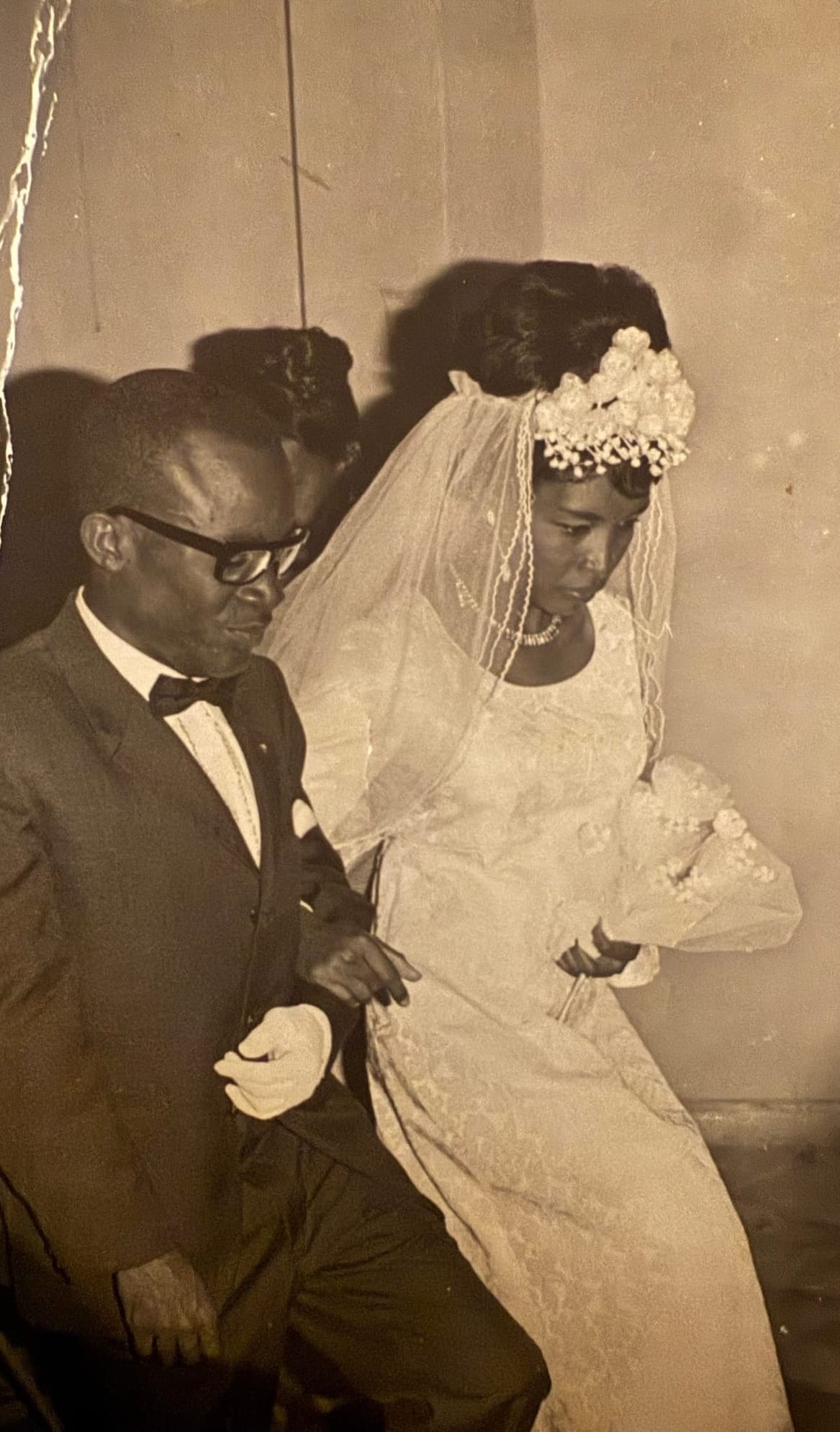
A: Yes. My mother, Paulette, and my dad, Edwidge, came to America from Haiti in the ’70s. She was very well educated. She actually used to be a teacher in Haiti. We used to run into people who were her students all the time, parents of my friends or other adults, so that was really fun. She was a very generous woman. She was very active in our church. As I mentioned, she did the susu. Our house was where everyone came for family gatherings. My grandmother and mother were like sisters, honestly. She helped to raise a lot of my uncles and aunts and extended family. My mom had a total of eight siblings. They all came over around the 1970s.
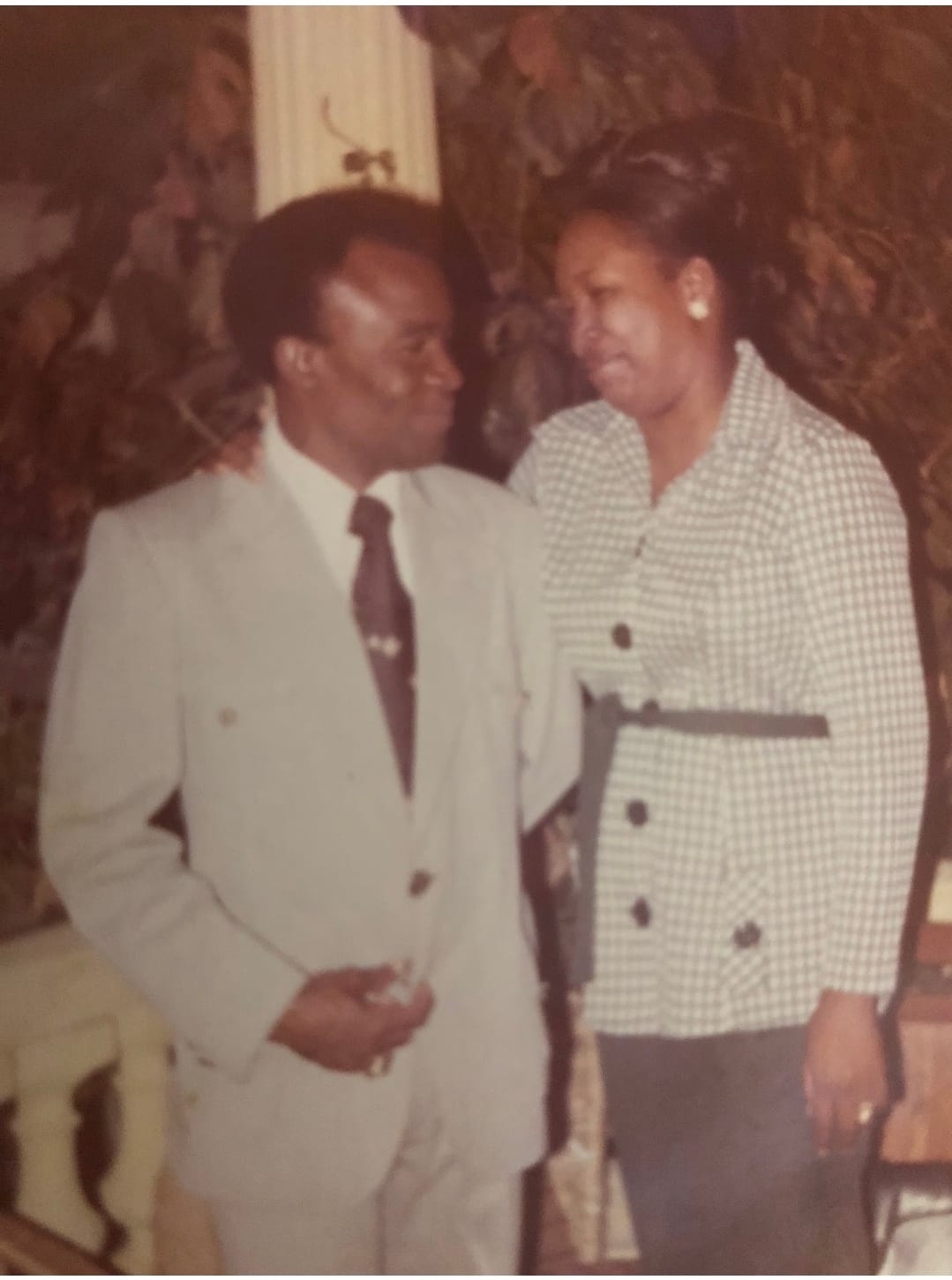
Our house was always a home base for anyone who would come over throughout the years. We always had friends and family who were coming and they would stay with us for a while until they got on their feet.
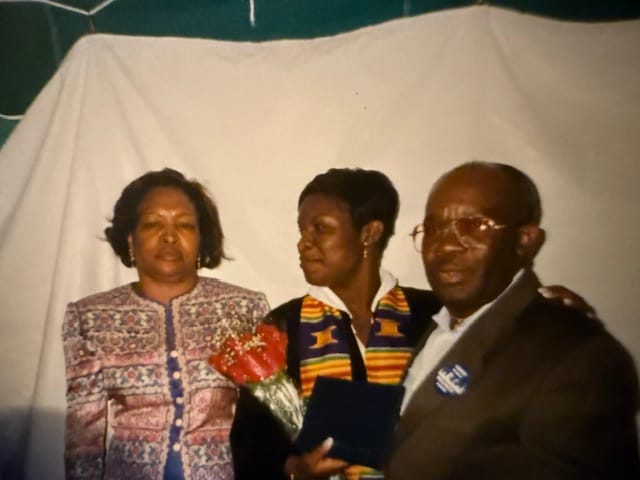
She was very smart. She was very loving. I have four siblings. She was waiting forever to be a grandmother, so when I had my son, her first grandchild, he was the joy of her life.
Q: Were there other factors when it came to your mother’s health?
A: It was very hard to watch her decline. I would say the biggest shift that we saw was after my grandmother passed. My grandmother passed in 2010, the year my oldest daughter was born. She was my mom’s best friend and her passing was rapid, as it was due to pancreatic cancer. After that, we started seeing changes in my mother. She cried often and lost interest in a lot of things and things kind of continued to deteriorate from there. My mother passed the year my second daughter was born in 2018, eight years later. Most people live with Alzheimer’s disease for an average of five to 20 years.
[Losing my grandmother] really hurt her. She was taken off guard. She never got back up from that. I think it was an emotionally distressing time.
I'm not saying that that was why she developed dementia. After that, my mother wasn't able to function as well as she was able to function before. Because of the depression she went through and because of the challenge of that time, things were more apparent. I know now that symptoms of depression and dementia often mirror each other. I'm not a doctor [but as a public health expert], I think back to what happened with her. She never recovered. She never went back to her regular level of functioning.
As I mentioned before, my mother was diabetic. She had managed her diabetes for many years with few complications, but when my grandmother passed, her diabetes was out of control. Her numbers were through the roof.
I told her, “I'm going to go to the doctor with you next time, because every time you're telling me you're going, I don't see what's changing, what's happening.” When I went to her primary care doctor appointment with her, he seemed pretty annoyed that she was there. He said, “Well, she has Alzheimer's. She has dementia. What can I do?”
I didn't know. It was a shock to me. The doctor said he had explained it to her and he had explained it to my dad, because my dad had accompanied my mother. My dad was at the visit, but he tends to just sit in the car. The doctor said he told them both.
As a first-generation immigrant, I see the difference in how my parents access health care. They don’t ask many questions of the doctor. They think the doctor has it under control, even if they may not understand what is happening. With Alzheimer's disease, the doctors hold a piece of the puzzle, but honestly, it's really social supports that you need with this illness. At home, you have to manage the symptoms. You have to change your environment. You have to change how you live your life. The doctor can't do that. He didn't make any suggestions to talk with a social worker or nurse or anyone to support my mother and father at home.
Given my work in the field of public health, as soon as I found out her diagnosis, I said we need to find a different doctor, because we need more. We need more support. We need to be looking at all your illnesses and how dementia is impacting your diabetes and other conditions. This doctor is helping you with your diabetes, but is he helping you with your depression? Is he looking at all your medications and how you are functioning?
My mother said, “He's the doctor. Why are you asking me all these questions? The doctor gives you the answers.” I think in many communities, it's kind of odd. You have issues, but you don't want to bring it up to the doctor, even though you are at the doctor to help you. Well, I was not raised in Haiti; I was raised here. I just said, “We need more. We should get more from the doctor, so we're going to pick a new one.” And she was not happy with me trying to tell her what to do.
Long story short, we found a geriatrician at Maimonides [Medical Center] in Brooklyn. She was amazing. At every appointment, she would sit and listen before doing a physical, and she would talk with me, my mother, and my dad. She explained what Alzheimer's was and what it did to a person, what normal symptoms were. She would go over the medications and make adjustments. It was very helpful that my parents heard the information directly from the doctor. They would say, “Yes, Doris said that too.” But they wanted to hear it from that authority figure. I was also still learning all about it myself.
It was really helpful to have a provider to spend that time to answer questions, because there's a level of comfort that comes with being open and asking questions. … In a 15-minute doctor's appointment, you're not going to get all your needs out, and all your questions answered. Our appointments could be 30 minutes, but most were 45 to 60 minutes.
Over time, it became an even better exchange, because the geriatrician got to know us, and we got to know her and her staff. My parents were able to ask questions and be honest. We were able to share stories, laugh, test things, and come back to share results if that worked, and really have a dialogue about the care. She had a social worker on her team who would share what we needed to prepare for. She would also walk us through where and how to do it.
We didn't have that in a regular primary care setting. I'm thankful that we were able to get on the right track. I wish that we were able to do it sooner, to get her and my father more support sooner. It was still hard watching her and seeing that she wasn't okay … and realizing there was no going back to the way she was before.
Q: What advice do you have to others about this situation?
A: I never really talked about being a caregiver openly, until maybe last year or the year before. It's hard. That's all I want to say first. It's hard being a caregiver. I would say I was the secondary caregiver. My dad was the primary caregiver, because he was there every day—dealing with it every day.
I didn't live with my mother. I would go over often. I would bring groceries and review medications and make calls, but I wasn’t there 24/7 the way he was.
It's a difficult journey. I think you have to lean on your strengths. At least, that's what I tried to do. I'm the organizer, the educator of the group, and that's what I leaned on. This is what I do. It wasn't helpful for me to think about what I couldn't do. I think just focusing on what I could do to educate friends and family and help my dad.
I can find an attorney. I can find a new doctor. I can read with her. I can submit papers. I can argue with whoever. What can I do right now? I would say for the caregivers to really just focus on that. There's so much that's out of your hands.
Find a provider that you can trust, that you can call at different times, that you can leave a message and they'll call you back. To me, the most important part of this journey is having someone that we can count on. And even when [my mother] ended up in a nursing home, she was no longer under the care of her geriatrician, but I could still call [the geriatrician] and ask her questions. She still allowed that to happen. She said, “I'm not the provider, but I'll go visit. I'll see what I can do.” Having someone that you can ask these questions openly and question the plan of care, to share honest feedback about medications or say we are not comfortable with that. I think empowering yourself with as much information as you can, recognizing … and leaning on your strength.
Q: Can you speak on how you and your siblings and your father provided co-caregiving support?
A: Everybody goes through it differently. I feel like everyone has to go through it the way you go through things. My brothers were all supportive and present when needed. I could call on them for anything. I gave my siblings the 24/7 helpline number, so they could get their own information and call. We sent articles back and forth.
I didn't do support groups, but my sister went to support groups and that was helpful for her particularly, because she lived further away. My father also attended a few support group sessions. He would share how others were really struggling. He was able to share tips and information. I think he felt empowered. It can be helpful to talk with other people to get and lend support.
I stay indebted to my dad and in awe of his strength. He just passed away in May 2025.
Q: I’m sorry to hear about that.
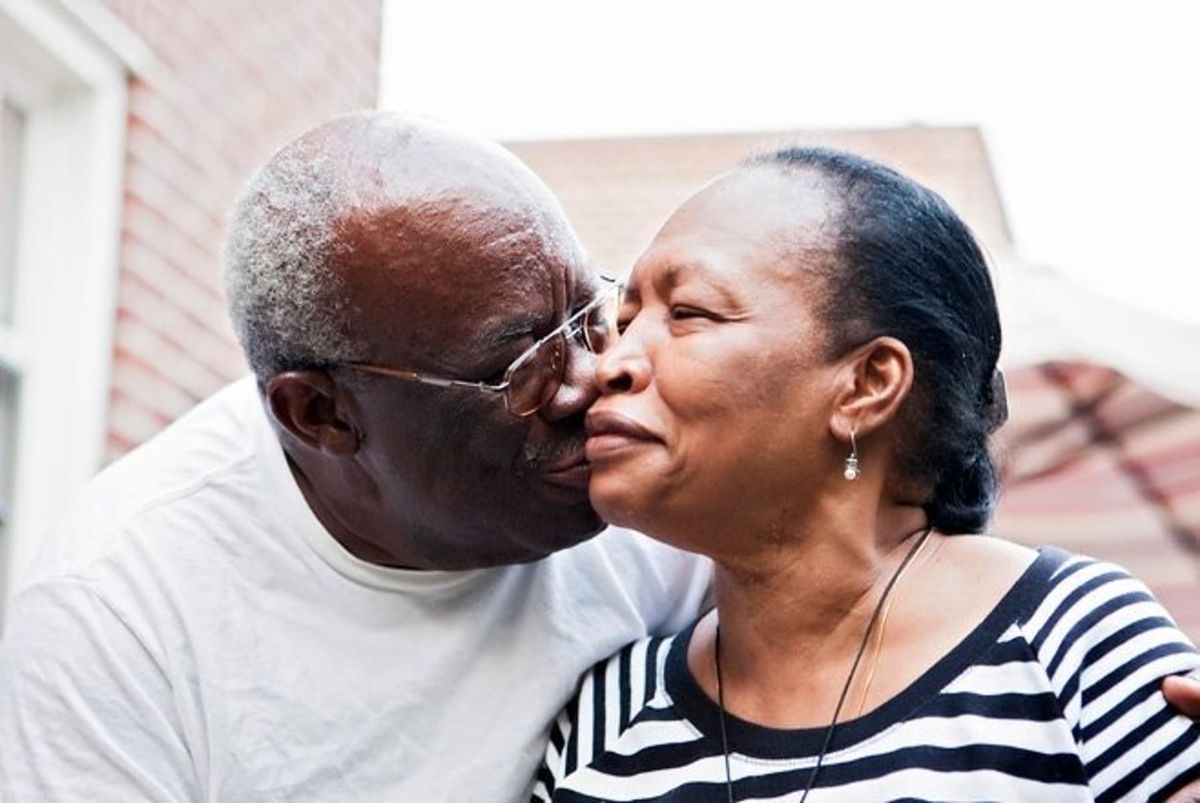
A: Thank you. The most impactful part of this experience was watching him support her, watching their love and their relationship carry them through this. Because there were times—like the late stage, she couldn't speak but she would respond to him with her eyes or squeeze his hand and even give him a kiss. He was there every day at home and at the nursing home every day.
As the disease progressed, it became hard for my mother to recognize people. This can throw off so many people and they may feel hurt, sad, or even angry when their loved one doesn't recognize them anymore. That didn't bother me. This was a part of the disease, but I know who she is. I know she loves me. Those things didn't throw me off. I know for some caregivers, it does. I just leaned into our past relationship. Like most mother-daughters, everyone has their friction, but we had a lovely connection. I could count on her for everything. I hope she knew that she could always count on me.
This Q&A has been edited for length and clarity.
Medical Disclaimer
All content available on and through Health Nation Media is for informational purposes only. Such content is not an endorsement of, or a substitute for, nor does it replace, professional medical or veterinary advice, diagnosis, or treatment. If you have any concerns or questions about your or others' health or the content available on or through Health Nation Media, consult with a healthcare professional. Do not disregard, avoid, or delay obtaining health-related advice from a healthcare professional because of content available on or through Health Nation Media. Use of Health Nation Media and reliance on any Health Nation Media information is solely at your own risk. For more details, see Health Nation Media's Terms of Use.