
International Caribbean Women, Alliance for Empowerment, advocates for community financial health, small business health and more
The International Caribbean Women Alliance for Empowerment Manhattan September 2026 event had both in-person and online international community participants to discuss trade, development and small business opportunities in the international space for professionals of color, women, and immigrants.
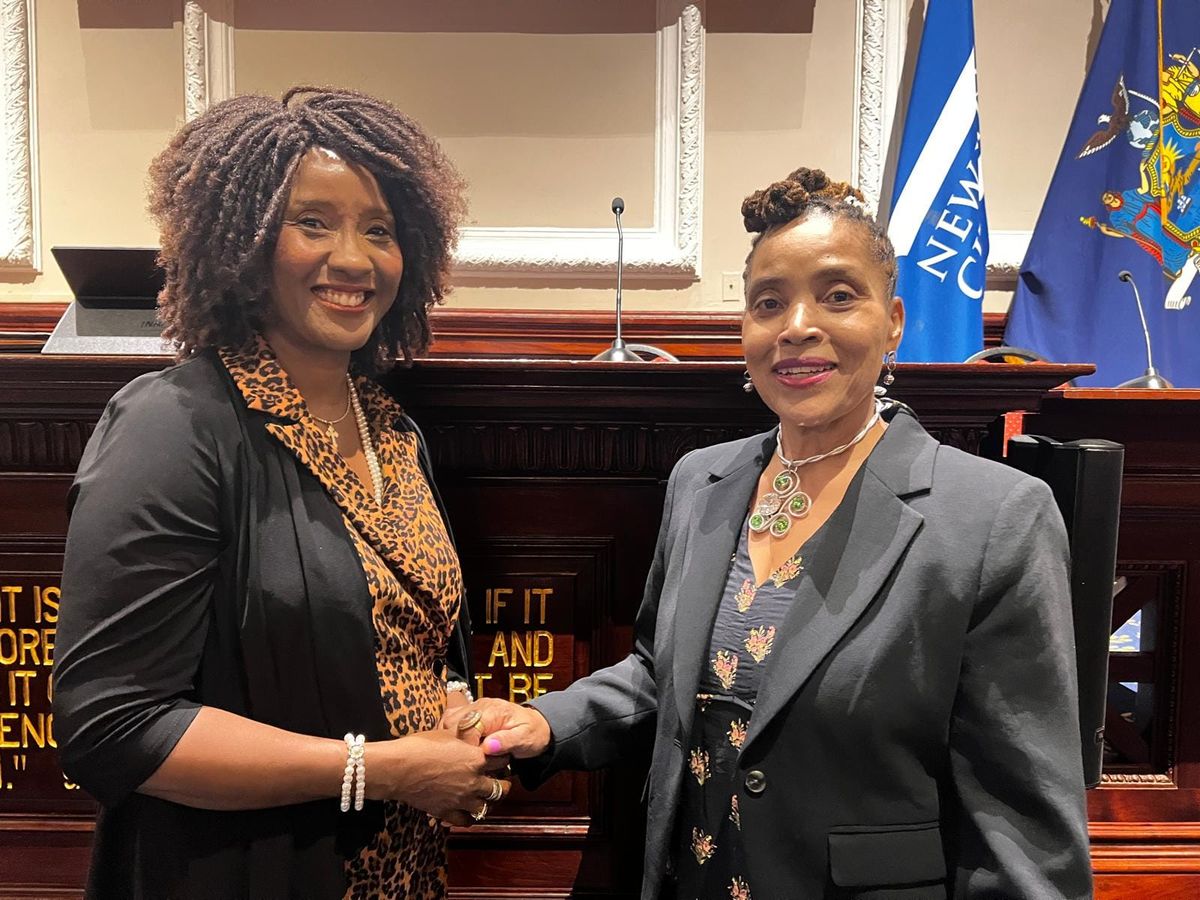
Q: Can you tell me more about you and your biography and professional experience?
My name is Yveline Dalmacy. I am an attorney, barred [licensed to practice law] in New York and in the District of Columbia. I'm also the founder and chief executive director of the International Caribbean Women Alliance for Empowerment.
My education has always been geared towards getting more knowledge, more tools, so I can be of help to others. That's why I was able to get so many degrees.
Q: Can you tell me where you're from originally? What is your immigrant family origin story?
A: I am from Haiti, born, and raised in, uh, Port-au-Prince, Haiti. I am Haitian-American and have lived in the United States for over 40 years. My story, like many, Haitian stories, is that you come here to get a better education, and then you plan on going back home. Like many Haitians, we always don't end up going back home [to live]. By the time we're done with our studies, situations have changed. In my case, I came as a teenager, in my early teens, so that means I did not have a choice in the matter. My immigration story started at a very young age.
Q: Tell me more about the International Caribbean Women Alliance for Empowerment and the recent inaugural event you hosted.
We held the Africa Caribbean USA Summit event. There's a huge gap between African countries and the Caribbean, and also the U.S. I don't think a lot of countries in Africa think or know that the Caribbean is an extension of Africa and the African Diaspora. A gap exists.
I don't think there's enough business that goes on, enough trade that goes on between Africa, the Caribbean and the US as a trusted partner to both, you know, connecting the continent Africa and the Caribbean region. My goal in doing this event was to sort of bridge the gap a little bit.
I’m putting on my economist hat. We want to get people interested at minimum, get people to start thinking that there's a different way to increase trade between Africa and the Caribbean. Trade is one of the facilitators to creating wealth. A lot of countries are not self-sufficient. A lot of countries specialize in certain items. That's why you have trade, if you specialize in something. If you have the resources where you can manufacture or grow a certain product, then the excess of that product, you trade. And by extension, when you trade, that creates jobs, it creates wealth, it creates a lot of positive things, including stability, socio-economic growth, improved health, everything.
That's why I thought it was important. We have to see if we can bridge the gap, get some interest. African countries have money and resources.Caribbean countries have money and resources, and we have people. We have a lot of young folks, as does Africa, by extension. When I mean Africa, I'm talking about the entire continent, not any one country in particular. There's a huge demand from both sides. In the Caribbean, we need money, we need capital, we need infrastructure, we need investors. There are certain resources we don't have. African countries have a lot of resources. Africa has money. Let’s start talking about trade opportunities.
A lot of African countries have come together through the African Continental Free Trade Agreement. And now a lot of intra-trade is going on. The Caribbean is a natural extension of that. We are a natural extension of Africa. So that is why we hosted our annual summit to explore possibilities, potentialities between Africa and the Caribbean, where we can start trading, where we can start doing business with each other with benefit for both sides, create jobs, create wealth and knowledge and areas of expertise. We may not succeed 100%, but at least the conversation has started. So that's why it was important for me to hold that summit.
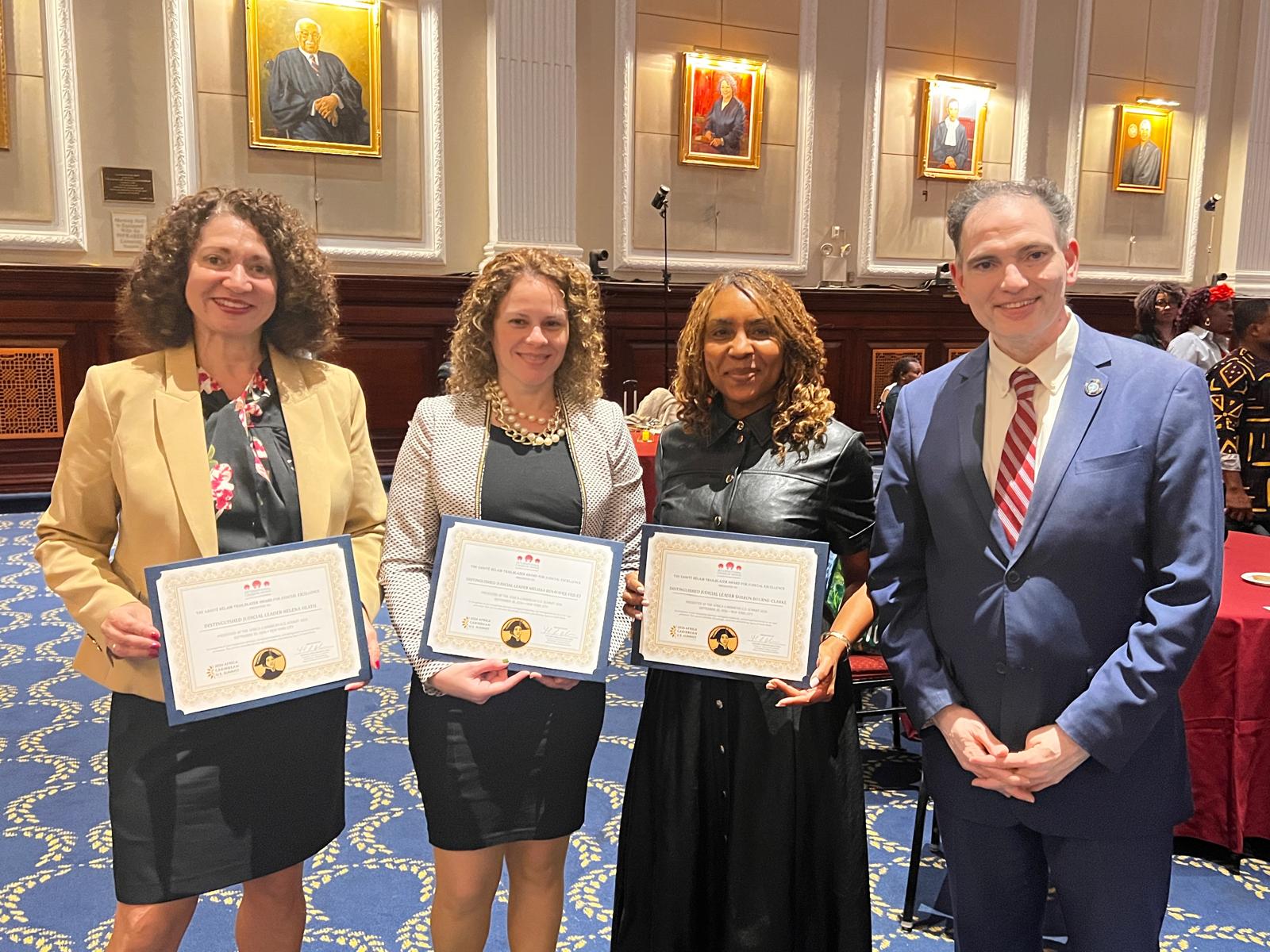
Q: Tell me more about some of the invitees, the award recipients and other attendees who participated either in person or online?
I do have a track record based upon my credibility. I think that has something to do with it as well, based upon the speakers, the panelists. I've been trying for a very, very long time in the spaces that I've been in to see how I can help empower people, whether it's people from Haiti, immigrants, women. My goal, my work, you know has always been to be helpful to others, to be in the space where we can empower women financially and hopefully politically as well. So, because of my work, I think it goes back, people know I'm serious, people know that I have dedicated my life to being of service to others. I've been in that space, operating from that space for a very long time, I would say as early as 2003. That means over 20-years plus years of being of service, of working. I think that builds a little bit of credibility. I think that's why people came. People flew from all over the United States to come and take part.
People came from Costa Rica, and within the United States, they came from Chicago, Illinois, Michigan, Texas, Maryland. Among online participants, we had folks from, you know, Nigeria, and other West African countries. We may have had folks from Antigua, from Vienna, Austria and other countries as well.
Q: Is there anyone who you want to thank?
It's a testament to the work that God is doing in my life, aligning folks, aligning people, you know, um, to want to be of help, to want to take part, to participate in this. So, I will not take credit for any of this. A lot of people helped to put it together. I think, um, all glory, all credit is to God for helping to make this, you know, the success that I think it was. I will not take credit for this. Of course, I thank the folks that helped me put it together, the panelists for coming. I have to give credit to a lot of people that helped me, from the graphic designer, the photographers, interns, to all the attendees, everyone.
The utmost credit, you know, to God, because without him, I probably would not have even thought of something like this. And, you know, even if it was something that was out of reach when you thought about it, like, you know, this is huge.
I think God just aligned the right people. And by his grace, we were able to have a great summit.
Q: Can you tell me more about your organization and any partnering organizations that you worked with?
It is a not-for-profit, the International Caribbean that hosted that event. But it's the Women's Power Media organization, a for-profit organization that created and sponsored this event. I'm happy with the outcome.
Q: Can you speak specifics about if someone wants to get involved or to get more information?
A: You have to do your research. You have to start from your own knowledge base and build upon that. So nobody's going to go ahead and start a business without knowing some of the ins and outs, without talking to folks. Speak to professionals from the Global Chamber of Commerce, the U.S. Department of Commerce and people involved in international franchising businesses, and of course, people already in the professional international trade, or international business space.
Look to Chambers of Commerce organizations based on the state you are in. It's so important to have trade trips that they take people to different areas to see what businesses are needed and what is available with existing business. That’s how you start to become a global business entrepreneur. Do your research. Ask yourself what sort of product do I want to import or export? Where do I start? Do I want to provide a service? What do I need to put in place?
As a matter of fact, Ghana's having a summit in November, so if you want to trade, start import or export, with Ghana, for instance, go and start information gathering. It might be costly to go there to start to get the knowledge base, but you have to do your research about requirements and regulations, visa requirements, bank account requirements, and minimum investments, especially if you do not know anybody in that professional space. You must create a business plan, and from that business plan, you could build up, make changes on your business plan based on the information you receive from your research business trips. As you build it, as you work on it. A business plan, that's your roadmap to business success.
Work in the space first, if they have no prior knowledge. Let's say you want to own a franchise, for instance, you have no clue about that franchise. Some people, what they do, they get a job, they work there, you know, for a number of months or years. Then ask yourself, is this the kind of business that I want to go into? Is this for me?
For legal professionals, the legal field is ripe for us to step in and to help provide legal expertise. I'm still getting the knowledge base under my belt as much as I can.
A quick example, a lot of African countries right now, they want to build their health infrastructure, or at minimum, build upon what already exists.
Let's say if you're in the healthcare field, if you are entrepreneurs that build healthcare centers, that build hospitals, there's a huge need right now, in a lot of these African countries. For somebody with that knowledge, that can build hospitals, health care centers or a business within the health care industry. This is a niche area, because the need is there. If you have knowledge, you have the expertise, why not consider that business opportunity? If the need is there, and if you can fulfill that gap, why not?
You definitely need to have a knowledgeable attorney to help guide you, you definitely need to do your homework.
Medical Disclaimer
All content available on and through Health Nation Media is for informational purposes only. Such content is not an endorsement of, or a substitute for, nor does it replace, professional medical or veterinary advice, diagnosis, or treatment. If you have any concerns or questions about your or others' health or the content available on or through Health Nation Media, consult with a healthcare professional. Do not disregard, avoid, or delay obtaining health-related advice from a healthcare professional because of content available on or through Health Nation Media. Use of Health Nation Media and reliance on any Health Nation Media information is solely at your own risk. For more details, see Health Nation Media's Terms of Use.