
Long-Form interview with Alex Miller on caregiving for his father: How he dealt with guilt after caregiver burnout
Alex Miller, 40, temporarily relocated to Alabama, where he was a primary caregiver for his father who was aging in place with dementia, glaucoma and other health issues. Today, Miller talks with his father every week, but wishes he could do more.
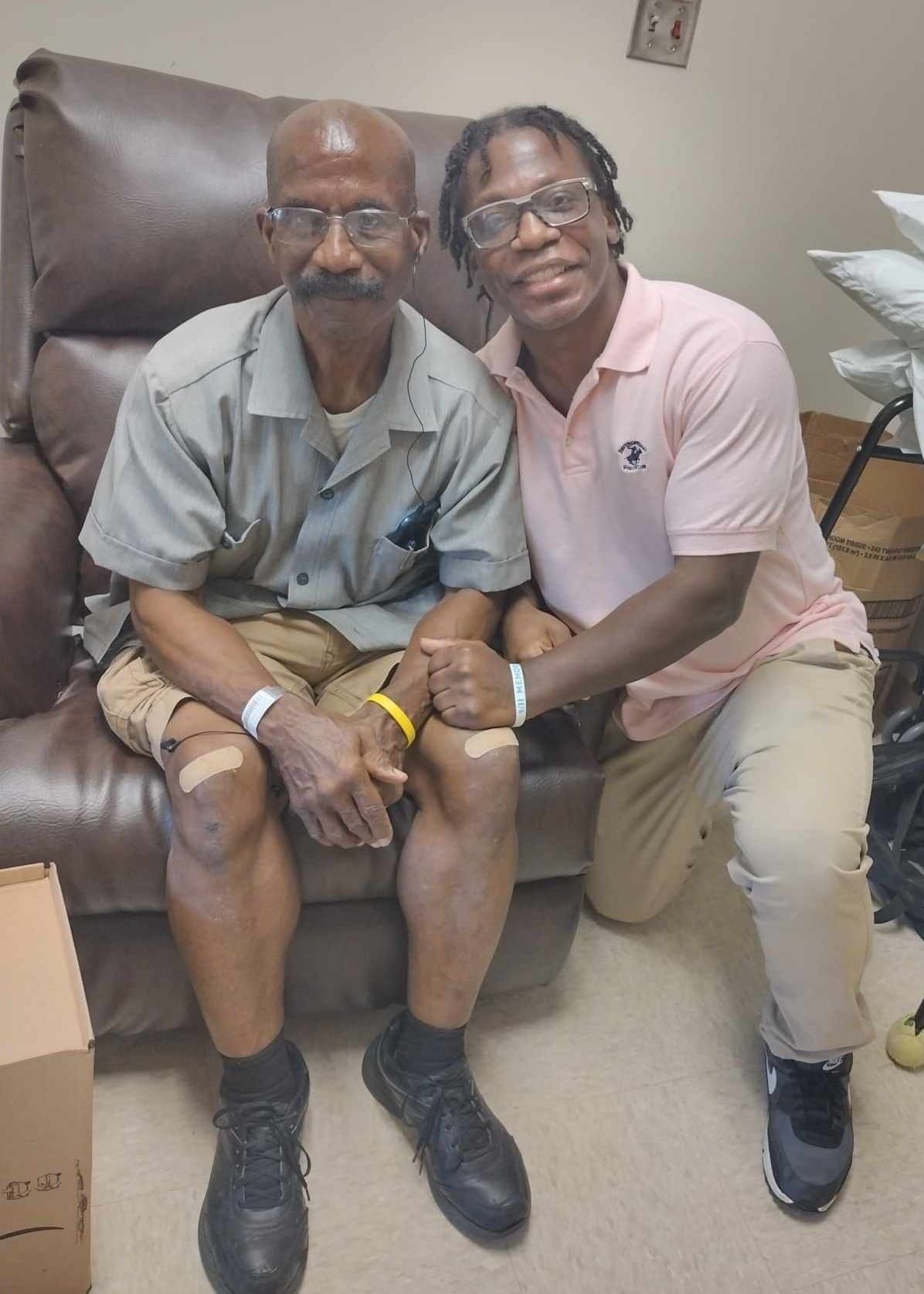
Q: Please tell me more about you and your family.
A: I was born in Chicago and lived in Chicago until I was 11. My father and my stepmom got custody of me, so I moved to Anaheim, California. I moved to New York in 2010.
Q: Is your family from Alabama?
A: My biological mother and her family are from Alabama. My stepmom’s family is from Alabama. My father and stepmother currently live in Alabama. … So, lots of connections to the South. My stepmother has lived in a nursing home for three years. My father has his own house [where he currently is living]. My father is from St. Louis, [Missouri].
Q: How old is your father currently?
A: He'll be 78 in September [2026].
Q: Tell me more about your caregiving journey.
A: I left New York in 2020, moved down there, and lived down there with them for 10 months. Then, I moved back to New York. My father isn't necessarily a threat to others … but he has sundown moments. That's part of the reason I had to give up living with him [and caregiving] because he was threatening to hit me. … He was trying to hurt me.
My father felt that it was a violation for me to help him.
The logistics are tough because in Alabama, it's hard to get somebody committed. Even when they really need to be in a care facility, it is difficult as hell to get somebody admitted. ... Multiple things have to be going on in order for the state to get involved. They have to be a threat to themselves and/or others.
Q: I'm sorry.
A: He didn't understand. … His mind doesn't work like it should. It made more sense for me to move back to New York and give him space [for now].
You can't do [anything or get help] until something happens. [Medical professionals and legal and state facility administrators] have to determine the individual is a threat to themselves or others. That's the really unfortunate part. You have to have proof that this person has to be taken by the state. That runs a series of risks as well.
Q: That sounds very difficult. Who is currently providing the day-to-day care for your father?
A: Well, nobody. We can't get someone to take care of him. That's the whole thing. If it was up to us, we would have somebody taking care of both of them [my father and stepmother], but we can't.
Q: Just to be clear, is your father currently refusing your caregiving support and managing his doctor appointments?
A: Yes.
Q: Does he accept a home health aide coming to his home?
A: He didn't like that either. My stepmother is in a nursing home now. … It's a tough nut, you know.
Q: Was your father officially diagnosed with Alzheimer's or another form of dementia?
A: Dementia. He didn't tell us that he had it. He found out that he had it back in 2017. We found out later … years later [around 2021] that my father was actually diagnosed with dementia. He just didn't offer up that information. I saw my father’s medical papers in 2021 and [that’s how I found out]. I think some dementia patients are in denial, you know? They don't want to admit that they have this [disease].
Q: How old was your father in 2017 when he first started undergoing dementia-related tests?
A: 69.
Q: Do you know more about why your father went to the doctor in 2017?
A: I think what happened is my stepmom spoke independently to one of his doctors. She brought up some issues. He got tested, but he didn't share the information with her at the time.
Q: Have you been to any medical appointments together with your father involving his care?
A: I have. They haven't been for his dementia. It's been for other stuff, for eye exams, glaucoma appointments and colorectal exams and stuff like that. When he had his neurological appointments, he wouldn't tell us. That was a real issue.
Q: Is your father currently driving to appointments or for other reasons?
A: I believe so. I mean, it's not advised for people with dementia to drive. It's just unadvisable. You can't get him institutionalized unless something like an accident happens. So although you don't want it to … you kind of hope to get him off the street, because I don't want him to hurt people, you know what I mean? The state won't move in to do anything until…. you know [a crisis happens]. It's this really crazy catch-22. I don't want him on his own or putting other people at risk.
Q: How long were you a caregiver for your father?
A: I was there [in Alabama] for 10 months. Then, my dad threatened to hurt me. I had to leave [for New York] because he just resented me being there. He'd been the breadwinner for so long. In my father’s fragile mind state, he saw me as a threat to his masculinity. I think that's what was going on.
Q: Do you have a family history of dementia?
A: On my mother's side.
"We had a strong bond. When I was really young, it was contentious. Oftentimes, he would be out working three or four jobs just to keep food on the table. But, over time, it just really grew into a mutual respect and love and appreciation for the sacrifices that he made when I was growing up. My dad was amazing."
Q: How would you describe your relationship before your father got sick?
We had a strong bond. When I was really young, it was contentious. Oftentimes, he would be out working three or four jobs just to keep food on the table.
But, over time, it just really grew into a mutual respect and love and appreciation for the sacrifices that he made when I was growing up. My dad was amazing.
Q: Did your father serve in the military?
A: The Army.
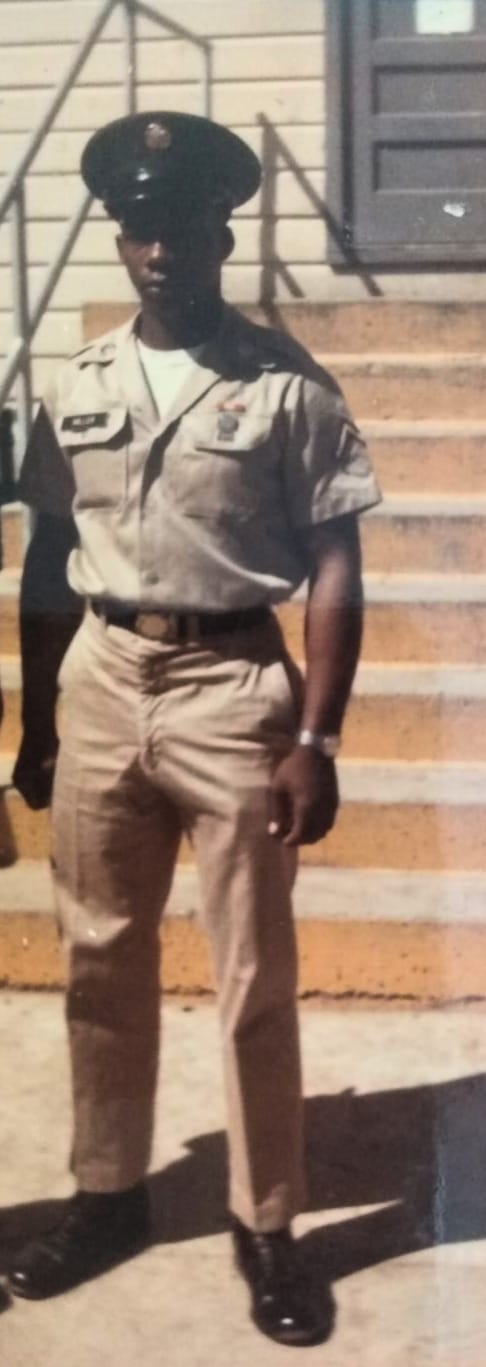
Q: Does your father get Department of Veteran Affairs (VA) health benefits and/or other health insurance?
A: He gets VA benefits. It depends on who you are, that determines how much of a benefit you receive from the VA, because if you receive too much money from the VA, you can't also get other benefits … but [my father] qualifies for Medicaid and the VA, so he uses both.
Q: How do you get the support that you need? Because your situation sounds really hard.
A: Well, therapy helps. Friends and having a support system. … It helps to have people looking out for you.
Q: Do you have any idea about what stage your father's dementia is?
A: In a pretty early stage. We don't know exactly when he [was diagnosed], so it's just tough to say.
Q: How often do you talk to your father now?
A: We talk every week. It's hard to get a straight answer out of him, because he does make up a lot of stuff. It gets harder and harder to have a realistic conversation with him, because I don't know how much of it is fictional and how much of it is him telling me the truth. He's on his own so often, so nobody can really monitor him, so it's tough.
Our relationship didn't actually break down. He's a different person, so it's like I'm in this father-son relationship with a person who isn't my dad. This new guy sort of moved in and he’s taken over. He's living rent-free in my father's mind, you know what I'm saying? That's what it feels like.
Q: Are you able to rebuild your relationship on the phone? Can you tell me more?
Our relationship didn't actually break down. He's a different person, so it's like I'm in this father-son relationship with a person who isn't my dad. This new guy sort of moved in and he’s taken over. He's living rent-free in my father's mind, you know what I'm saying? That's what it feels like.
Q: Is there anything, as it relates to being African-American or a person of color, that you want to share? Do you have any advice for other people who are going through a similar situation?
A: Absolutely, if you are a Black person, if you are a Black man, get your mental health taken care of. Take care of your eyes, take care of your weight … go to the doctor.
A lot of Black dudes are really macho about seeing a doctor, but that's not something you can do. In this day and age, when science can help advance you and make your life better and fuller and help you live longer, you need to be on it. Go to the doctor. Stop being paranoid. They're not putting stuff in vaccines. Take care of yourself, because your future is what matters. That's the advice I would give. Just make sure to keep on top of your health, because that's all you got, and especially your mental health.
Many Black people don't even realize how prominent glaucoma is in the community. Once it's too late, now your eyesight is gone.
Q: Do you have any advice specific to family caregivers?
A: Be patient. You can't lose your head. Do what you can to help them, but don't beat yourself up if you can't.
Oh man, it was so rough. It was so hard for me to just leave my father. I just removed myself from the situation. I mean, [my father’s] not in his right state of mind. He hasn't been in a very long time. That's why I had to leave.
That's the part that hurts the most. For it to happen to him, he's such a wonderful person. It's just like this cosmic middle finger. Like, of all the people, it happened to him. It's unfair.
This interview has been edited for length and clarity.
Read Alex Miller's related Health Nation articles:
"My Dad Is Losing His Ability To Draw To Dementia. That’s Why I Hate AI Art."
Medical Disclaimer
All content available on and through Health Nation Media is for informational purposes only. Such content is not an endorsement of, or a substitute for, nor does it replace, professional medical or veterinary advice, diagnosis, or treatment. If you have any concerns or questions about your or others' health or the content available on or through Health Nation Media, consult with a healthcare professional. Do not disregard, avoid, or delay obtaining health-related advice from a healthcare professional because of content available on or through Health Nation Media. Use of Health Nation Media and reliance on any Health Nation Media information is solely at your own risk. For more details, see Health Nation Media's Terms of Use.