
Long-Form Expert Interview: High lung cancer rates, among both female smokers and non-smokers, are a growing public health concern
Dr. Thomas Bauer, M.D., M.B.A., a thoracic surgical oncologist, believes more public awareness on screening women for lung cancer is needed. According to Bauer, removing stigma, getting screened early, and being aware of available treatment options, are all key to lowering lung cancer death rates.
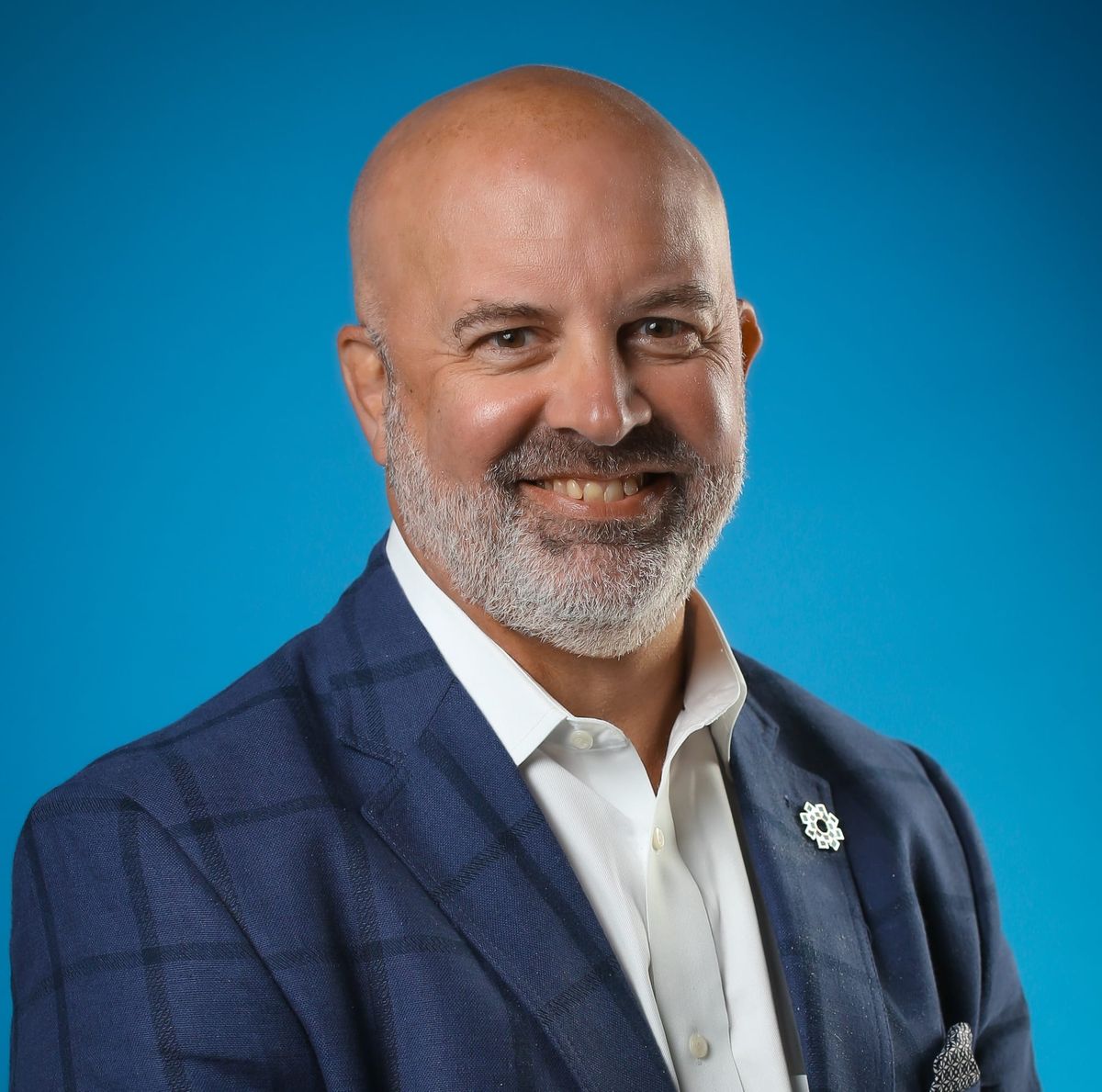
Q: Can you please introduce yourself?
A: I'm a thoracic surgeon by training. I am the chair of surgery for Jersey Shore University Medical Center and our southern region of five hospitals of Hackensack Meridian Health here in New Jersey. I’ve been practicing for approximately 25 years and have led and participated in a number of research trials surrounding lung cancer. Lung cancer treatment and research is certainly a large portion of what I do, in addition to various forms of screening for lung cancer, one of which is CAT scans.
Q: Can you just define the word thoracic for me?
A: I'm a thoracic surgeon, also known as a thoracic surgical oncologist. Thoracic is thorax. It's the chest and so for most people, its cardiothoracic, meaning heart and chest, or typically heart and lungs. You end up with cardiac surgeons who do heart surgery and thoracic surgeons who have the same, done heart and lung surgery in their training, but then specialize in everything in the chest kind of besides the heart. Thoracic is a chest surgeon operating on the lung, esophagus, diaphragm, chest wall, things in the chest.
Q: You're a thoracic oncologist, so can you explain if thoracic oncology means that you see oncology patients, or you do surgery, or both?
A: We're not giving chemotherapy like a medical oncologist, but we do a lot of research around lung cancer.
Q: Why did you pick thoracic surgery as a career choice?
A: My father's a surgeon. I'm the oldest, my brother who's three years behind me is a surgeon. Our sister, who is three years behind him, is a pediatrician.
I chose surgery because I got exposed to it at an early age. It just very much connected with what I thought my calling was and what my God-given talents had been, that I should be a surgeon. Then, I looked at all the different components. I originally wanted to join my father, who was not a thoracic surgeon. In high school, I saw lungs and the heart being operated on, and it just seemed like another level of intrigue more than the other parts of the body to me.
When I got confirmed in church in 10th grade, I wrote what my statement of faith was and that I was called to be a physician and specifically to help to heal the sick and comfort the dying. I don't know what made me feel that that was my calling when I was in 10th grade. The third, was to help my neighbor in any way that I could. A lot of my career has been really dedicated to research on lung cancer to prevent it to identify it early, different ways to cure it with different kinds of surgery, and then adding other ways of treating it with radiation or other ways of ablating or killing the cancer. It has been a long process, essentially a lifelong passion.
Q: What is a common misconception about lung cancer, generally speaking? And then is there a common misconception about lung cancer among women if it's different?
A: I guess one misconception across the board is that there isn't anything that you can do to identify or prevent lung cancer. And another misconception is if you get lung cancer, you're going to immediately die. Neither of those are correct.
For women, I think a common misconception would be common cancer for women is breast cancer. The reality is that more women die from lung cancer than if you add breast and ovarian and cervical cancer [deaths] added together. It still doesn't equal the number of women dying from lung cancer.
Lung cancer is the number one cause of death in women by far.
Q: Are lung cancer rates increasing among women?
A: Lung cancer incidence in women's been increasing for many years and it's probably starting to just tail off. The perception among women for lung cancer, I think, has a stigma associated with it. People don't talk about it, even though it is by far the most common cause of cancer deaths in women.
Q: When it comes to the causes of lung cancer among your patients, how many are or were smokers versus non-smokers?
A: The most common cause of lung cancer is smoking. However, about 20% of women who develop lung cancer are non-smokers. In men, it’s 10%. So in men, 90% of everyone, all men that get lung cancer, it tends to be associated with smoking. In women, it's only about 80% associated with smoking, 20% associated with not smoking, so that is a significant difference between men and women.
Q: What is the reason for that discrepancy? Do you think there may be a component of secondhand smoke exposure or an environmental element?
A: I think secondhand smoking gets usually attributed to smoking, either firsthand, meaning you're smoking, or secondhand, but some of the literature doesn't address that, so some could be secondhand smoking.
Worldwide, women are doing most of the food prep over open fires. You're not thinking of secondhand smoke for someone in the kitchen, but if they are cooking with open flames, then their smoke exposure is much higher. In Asia, there is a disproportionate higher incidence of lung cancer in non-smokers, and that's felt to be genetic. We just don't know yet. We haven't, as of yet, identified either a single or a set of genes that are responsible. We're looking for these markers because then we would better be able to target individuals and families or populations at risk. We haven't found it yet.
Q: Speaking of environmental exposure involving individuals, who work in nail salons, individuals who work of any background, who work in factories, or who have work or occupational exposure. What are your thoughts in terms of environmental or occupational exposure and lung cancer risks?
A: Obviously, the number one exposure is tobacco. Radon is typically thought of the next, and then secondhand smoke.
Q: Can you define what radon is?
A: Radon is a radioactive gas that is present in certain soils, and most homeowners would be aware of it if they're selling a house. Not everywhere, but certainly in a number of areas, they will want to do a radon test in the basement. Basically it comes from the soil and comes up through the cement in the basement and certain rocky areas tend to have a higher radon release. Radon tends to be in poorly ventilated basements and it's more geography specific. Typically, it's abated with a ventilation system in the basement and it blows out the gas that's coming up that has a radioactivity to it and it's dispersed in the environment.
Asbestos also increases your risk of developing lung cancer. And if you have asbestos and smoking, it dramatically increases your risk. We do know that heavy metals and chemicals increase your risk. Things you mentioned, like the nail salon and other exposures, may very well carry an increased risk.
Q: How would you speak to a patient who smokes or smoked in the past, who blames themselves about a lung cancer diagnosis. How would you approach that in a patient-centered way?
A: What I tell them is if we're going to look at illness that way, then we're going to have to kick 80% of all the patients in the hospital out. Because 80% of disease to some degree is self-imposed. It's through choices we made of things we did or things we didn't do. You are no different than everybody else who is currently in the hospital having surgery or being treated for an illness. It is part of human nature. You're no more responsible for your condition than everybody else who's in a doctor's office today, or at least 80% of them. So, you have a lot of company.
Q: Imagine a community member, not a patient of yours, who said an individual with lung cancer is at fault for having a lung cancer diagnosis. Sometimes it seems that lung cancer patients are blamed or not treated as sympathetically, as compared to individuals with other kinds of cancers. How would you approach that?
A: You could pick any societal issue and say they brought it on themselves. They should have worked harder. They should have done this, they should have done that. We could take every aspect of society, except the small portion that's doing perfect in every regard and blame them for their own situation. We know full well that our society is multifactorial and never is it just one thing. It was the medical community who advertised and helped the tobacco companies advertise in the 1950s. It is our government who allowed carcinogenesis generating compounds to be sold, and, and to this day are allowed to be sold.
So our whole society has been complicit. Do they own some responsibility? Yes.
Why do I say that? Well, because that it's also their responsibility and ability to stop smoking, or to get screened with CAT scans and make themselves healthier, Do what is the right thing so we can identify it, and if we find it, treat it.
Q: When it comes to vaping, do you have anything you want to share as a medical professional about the potential for increased lung cancer rates and that vaping is not healthy for you.
A: We know that vaping does cause lung diseases and likely with continued research and people doing it, we'll find even more disease. So, vaping is not healthy. Technically, it may be healthier than smoking. The analogy that I use there is, if you're out at sea fishing, and one person is shooting five holes in the bottom of the boat and the other person's only shooting two holes, you know, [you could say] this is safer.
That's somewhat of a silly conversation in that, yes, shooting two holes in the bottom of your boat is safer than shooting five holes. But it only takes one hole to sink the boat. The point is, it's unhealthy to shoot holes in your boat. It is unhealthy to vape. It is unhealthy to smoke.
These are analogies I use for patients because they understand, two holes are better than five, but I don't want anybody shooting a hole in my boat.
Q: Can you speak more about how you work with patients who are smoking or trying smoking cessation programs?
A: My goal is to help people quit no matter what reason they're seeing me, whether they have lung cancer or not, if they're having a different kind of surgery. If someone's smoking, I invest a fair amount of time in educating them as to the concern, and that applies to vaping also, and then ways to what I think is going work best for them to facilitate them to stop smoking in some fashion.
Q: Can you speak more on smoking and the prevention of lung cancer as a medical professional?
A: A couple things. Number one, if you're smoking, you should speak with your doctor about whether you qualify for any of the tests that we have to diagnose lung cancer. That tends to be CAT scans, but we have some other tests that we're working on. Number two, women tend to be the least informed of lung cancer screening modalities. I think that is because it's still seen as a male disease.
Women should be aware that there's lung cancer screening, and they should avail themselves to it.
Next, it's never too late to stop smoking. Many people feel like, I've smoked many years, so the damage is done, what's the point? The day you stop smoking, your risk of lung cancer, cardiovascular disease, it's a long list of other cancers and disease processes that immediately start to decrease.
It is never too late. Some will say, it's impossible, I can't do it [quit smoking]. There's a number of quitlines and support groups. Stuff on the internet that can help people either using various medications or hypnosis, acupuncture, nicotine replacement using the patch and or gum to wean themselves off of the nicotine as they alter their behavior to get rid of the nicotine and the habits of smoking. You also physiologically are able to wean your body off of the nicotine dependence to where you no longer need the nicotine in your bloodstream.
Q: Can you speak more about women and lung cancer and routine checks?
A: Women, historically and culturally are a little bit more attuned to routine examinations. We’ve counseled women that they should go to their gynecologist on a regular basis. They should be doing self-breast exams on a regular basis. They should get mammograms. If you polled your readers, most of them would say, yes, I know I should do these things.
But if you ask the same number, should you get a CAT scan if you're a smoker, that same connection hasn't been made. Once you educate women of the need to get a CAT scan if you qualify as a smoker, then they are, in fact, more likely than men to follow through and get it. So with women, sometimes they're less aware of the need to get a CAT scan, or the risks of smoking, but once explained, then they're more likely to listen and get that CAT scan.
Q: For some, there is still the public perception in 2026, that people think a lung cancer diagnosis is going to be inevitably fatal and the individual might start experiencing symptoms and then go on to pass away within a few months of a lung cancer diagnosis. For example, one of the main fictional characters in the Mad Men series got lung cancer and died within a few months. Can you speak to the public perception of lung cancer versus the reality of lung cancer treatment?
A: If you're a smoker and qualify for lung cancer screening, then, if you develop lung cancer, your chances of being cured of that lung cancer are over 90%.
The idea that you're going to keel over at the office, cough, take your last breath, and die if you get lung cancer isn't true. If you're at risk and you get a lung cancer screening, we can identify it early, and we can cure you. If you ignore things, then bad things happen.
Next thing, for most of our lives, the ability to cure lung cancer really didn't change. If you go back to the 1950s, the 1960s, if you got lung cancer, [only] 13% of people were alive five years later.
Today, we've made huge advances, so if we find [lung cancer], we can work to get rid of it. We have more than doubled our long-term survival of lung cancer. Our ability to eradicate lung cancer if you have it and it's more advanced is improving every year. This is because we are finding it earlier and all the new medications are helping us treat the more advanced patients that much better.
The most important thing is to hope. The vast majority of people have a ton of hope that we can treat it.
If you have lung cancer, you're not alone. Whether it's Hackensack Meridian Health or your local hospital, they exist to help take care of you.
I think we change culture by intention, with one person helping another person. And those two people helping one another, and eliminating the stigma that people with lung cancer have done to themselves.
Society has this stigma. We can love one another and through that help get people treatment and support. Spread the word on lung cancer screening. If you qualify for the CAT scan, get the CAT scan, see your doctor. Help people stop smoking. Don't look at people with lung cancer with disdain, because that eliminates their hope. Comfort and encourage people so that they can talk about it.
You see so many women on TV talking about how they have breast cancer and comforting each other. Many, many, many more women are dying from lung cancer. Let’s also give these women the ability to comfort, speak freely, shed the stigma that I don't think should be there.
The more you talk about something, the more you identify, the more you can correct it and change things for the positive. Don't let lung cancer be the silent killer. Be vocal, encourage one another, be supportive, stop smoking if you are, and get a CAT scan if you can.
This Q&A has been edited for length and clarity.
Medical Disclaimer
All content available on and through Health Nation Media is for informational purposes only. Such content is not an endorsement of, or a substitute for, nor does it replace, professional medical or veterinary advice, diagnosis, or treatment. If you have any concerns or questions about your or others' health or the content available on or through Health Nation Media, consult with a healthcare professional. Do not disregard, avoid, or delay obtaining health-related advice from a healthcare professional because of content available on or through Health Nation Media. Use of Health Nation Media and reliance on any Health Nation Media information is solely at your own risk. For more details, see Health Nation Media's Terms of Use.