
Long-Form Interview: Geriatrician Expert Details the Emotional Impact Sundowning may have on Impacted Individuals and Caregivers
Sundowning, a cluster of symptoms common with dementia, includes irritability, agitation, pacing, wandering, and/or verbal and physical aggression. Sundowning is very common in the moderate to late stages of dementia; as dementia worsens, symptoms can also increase.

Q: Can you please introduce yourself and say more about your area of specialty?
A: My name is Dr. Kamal Wagle and I am a geriatrician. My training is in geriatrics. I've been a geriatrician for the last 15 years and I'm a memory disorder specialist. I work in a memory care center at Hackensack Meridian Health in New Jersey.
I work with both residential patients and patients who live in their homes [with caregivers]. I address sundowning every day in my practice. My specialty, focus and practice is all on memory disorders and how we can stay on top of our brain health, helping patients and the families navigate the complex area of memory disorders like Alzheimer's and other forms of dementia.
Q: When it comes to sundowning, can you define sundowning and explain what it is? How long have people been using this term?
A: The first documented Alzheimer patient was around 120 years ago. I would imagine the word sundowning has probably been in use for many years now. [Note: Sundowning is also known as sundown syndrome or sundowner’s syndrome. Senile nocturnal delirium was an earlier, less commonly used term].
Sundowning is a clinical phenomenon where a person with dementia will develop increased behavioral problems like anxiety, pacing, repeated conversation, agitation, including verbal, physical, emotional agitation; these symptoms tend to cluster around late afternoon and evening hours.
Sundowning is not a medical term. It's not a medical diagnosis. There is no diagnostic or billing code for sundowning. It's a cluster of symptoms dementia patients have. Not every patient with dementia experiences sundowning, but the majority of the people with dementia may exhibit sundowning symptoms.
There are different forms of dementia and Alzheimer's is one of the major types, but there are other types like Lewy Body dementia, frontotemporal dementia, vascular dementia, mixed dementia, there are a variety of types of dementia. Sundowning can happen in any dementia type.
We see more sundowning in the moderate and severe stages of dementia.
Q: Do certain individuals experience sundowning more often, like men or women or is it about the same rate for both?
A: Adults with dementia are such a heterogeneous group. Every older adult has comorbid health issues, environmental and other factors, so there's not as much specific research on sundowning and gender per se. There may be more information on this via the National Institute of Aging, Alzheimer's Association and other organizations.
Q: Would you say that sundowning is a symptom of dementia?
A: When people have sundowning, there may be a different variety of triggers. It's a cluster of symptoms.
Q: Can you just go over a list of some of the more common symptoms and how these symptoms may present?
A: Some of my patients start to open the kitchen cabinets and close them repeatedly. Some of my patients walk around the room repeatedly and they become just angry or upset. Some of my patients say they want to go home. They are [actually] in their home, but they feel a need to go to their home. They start packing and trying to leave.
There is also an increased risk of a problem in dementia called wandering. Some of my patients with dementia are very likely to elope, or get out of the house, and wander off. That also is more likely to happen in this sundowning time period, because people who are sundowning are more anxious, they're disruptive, they're agitated and they're irritable.
Q: Can you speak more on verbal and physical aggression? Is that specifically part of the cluster of symptoms of sundowning? Can you give some specific examples?
A: Yes, I vividly remember a situation. The patient became very angry and upset and blamed everything on the daughter, who was the primary caregiver. Again, this verbal aggression happens more in the afternoon or evenings. They’ll start saying ‘You're trying to hurt me’ or ‘You're taking or stealing these things from me’ or blaming everything they think is happening on the caregiver. [The caregiver was actually never doing anything wrong like hurting anyone or stealing].
There may be increased paranoia, suspiciousness and the presentation of this verbal aggression can become physical aggression.
I've had patients when trying to go to the bathroom or take a bath or changing clothes or after changing an adult diaper and they become very aggressive. They push the caregiver or aide or punch the caregiver or aide. They throw things at them. Agitation comes in different forms.
One of the other ways of agitation is pacing. The patient may start repeatedly pacing or repeating the same conversation and not listening. Those are a few very challenging examples of behaviors that can happen during sundowning.
Q: What is the best approach to treat or approach sundowning?
A: Number one, there is no one size fits all approach in addressing sundowning. Every time a patient tells me about what happened or a family member tells me about the challenge of sundowning, I like to understand the context. What kind of things exactly are happening? What is the environment? What are the other features a patient may be having? I’ll ask the caregiver, ‘How are you communicating with the patient?’
Rule number one, there's no medication that's proven to help sundowning or that'll decrease sundowning, without any side effects.
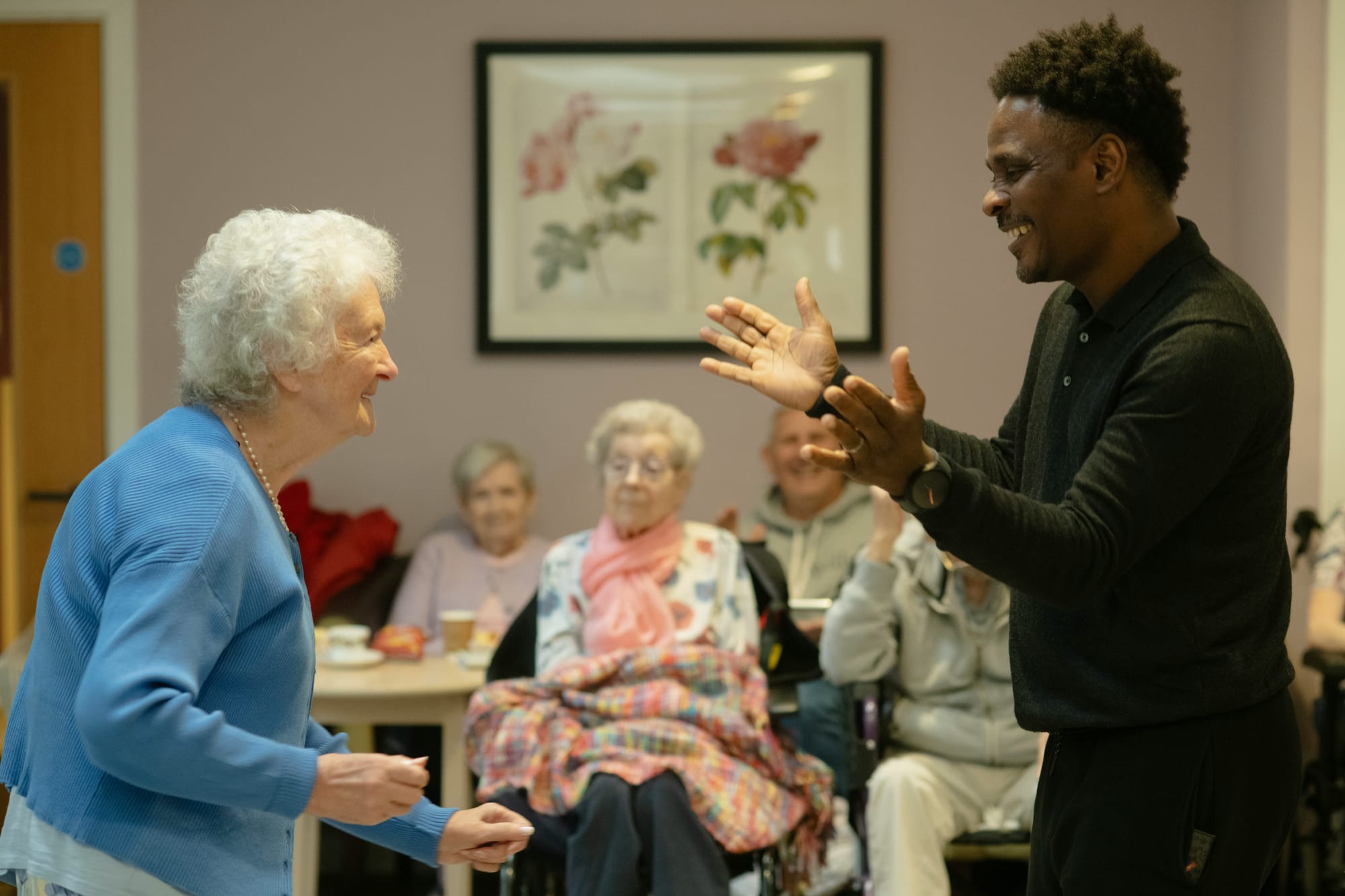
Number two, the first line of treatment is all environmental. How can we create an environment that helps the patient? How can we communicate with the patient with dementia to minimize sundowning?
It's impossible to change a person with dementia at the moderate or severe stages. It's all about changing the caregiver’s mindset or the mindset of people who are taking care of the patient. Give them strategies and/or figure out environmental [factors].
That's where I begin in addressing sundowning.
We can talk about the caregiving factor first. In caregiving, one of the possible hypotheses why sundowning happens is the caregiving individual wakes up with a lot of energy, they deal with the patient and the dynamics and feeding and all of those things. By the afternoon, they [the caregiver themselves] get exhausted.
The caregiver is exhausted, they get burned out. They may want to have a walk to catch their breath, but they can't do it. Or they may have phone calls to make it, but they have a patient with dementia sitting there. We need to monitor if that's happening, maybe the caregiver needs some respite. Maybe another son or daughter or neighbor or a paid caretaker or someone should be taking turns and supporting the patient with dementia.
The second thing is, how the caregiver is talking or communicating with the patient? It's not uncommon that some of my families say, ‘My mom is always doing this’, or ‘My dad is always an angry person, and he never liked me. He is doing this on purpose’ or ‘He's just trying to make me suffer’.
I try my best to tell [caregivers] it's not on purpose. Sundowning is a clinical phenomenon. It's a neurological cluster of symptoms where these sundowning behaviors are happening. It's out of the control of the patient. I educate [the caregivers]. I tell them to bring it to the Ten Absolutes of Communication that have helped many caregivers.
The Ten Absolutes of Alzheimer’s Care
- Never ARGUE, instead AGREE.
- Never REASON, instead DIVERT.
- Never REASON, instead DIVERT.
- Never SHAME, instead DISTRACT.
- Never LECTURE, instead REASSURE.
- Never say REMEMBER, instead say REMINISCE.
- Never say I TOLD YOU, instead REPEAT.
- Never say YOU CAN’T, instead say DO WHAT YOU CAN.
- Never COMMAND or DEMAND, instead ASK or MODEL
- Never CONDESCEND, instead ENCOURAGE and PRAISE.
- Never FORCE, instead REINFORCE.
The Alzheimer's Association/ Source: 1996 Jo Huey
How do you communicate with a patient with dementia? Like one of the Ten Absolutes, never argue, always agree, don't explain. You can't rationally explain and convince a patient with moderate to severe dementia on what's happening and calm them. It's all about agreeing with their concerns.
For example, if someone says, ‘I want to go home, let's go home, I'm packing, take me home’, and they are already at their home, the response should not be, ‘Oh, what are you talking about? This is your home and you've been here for 20 years’.
A better response might be, ‘Oh, you are thinking about your home. Tell me what you want to do when you get home’. Or you can say, ‘Look outside, it's dark right now. You have a bed here tonight, let's sleep here and we can talk about it tomorrow morning’. That is an example of reassuring and redirecting or diverting.
Endorse their feelings. If they're upset, you can say, ‘I can see’, or ‘I understand’ or ‘I feel that you are upset about it’. Acknowledging that the person is having difficulty, and redirecting to something the person may enjoy.
Some of my patients love listening to music from the 1960s, 1970s or any favorite music. Put music on the daily schedule.
I also tell caregivers, we need to treat the daytime as the daytime and we need to treat night as night. What I mean is, if a person has good sleep at night, it’s likely the day will be better. If a person is engaged appropriately during the day, hopefully the night will be better. I always emphasize the routine.
Make sure the nighttime is very conducive for sleep, lighting-wise, noise-wise, comfort-wise, technology-wise and so forth. During the day, make it really bright, make it engaging with a routine. When you treat the day as the day and night as a night, people fall into rhythm.
Still, during the day, another possible reason for sundowning is stimulation. It’s one of two things. People are overly stimulated. Maybe there's a whole lot happening. The dementia patient gets overwhelmed. Maybe understimulation. Maybe they get so bored, there's nothing to do. They haven’t gone outside. Let’s say the daughter caregiver is working from home for a few hours in the afternoon. The patient is sitting and there's really nothing to do. This under engagement also increases sundowning.
We need to find a balance of adequately engaging the person. We need to keep a routine. Okay, what are we going to do from 1 o'clock to 2 o'clock? What are you going to do from 2 p.m. to 3 p.m., 3 p.m. to 4 p.m.? If somebody typically has sundowning episodes at 3 o'clock, let's start to play the soothing music around 2.30 p.m. Be proactive. Let's make sure the person is hydrated.
Plan before the problem happens. When the problem happens, it's kind of too late already. Then you are kind of just in a reactive mode, how to calm the person down. To prevent severe sundowning, we need to be proactive by creating a routine, thinking of all of the factors: appropriate level of engagement, and making sure the person gets a good sleep, hydration, mealtime, snacktime, those kinds of things. And scheduling the day and evening activities.
Q: Let’s say an individual asks the caregiver-relative, ‘Who are you’ or ‘Why are you here? How can a caregiver navigate if there is fear or suspicion and/or lack of recognition?
A: We have to monitor. I mean, the caregivers should be vigilant and on high alert on how the person is doing as the day goes by. If the person looks exhausted, maybe we should proactively say, ‘Let's just take a nap for 20 minutes or 30 minutes. Let's take a nap, and when you get up from the nap, we'll have some snacks, hydrate ourselves and listen to music. Try to redirect before that happens.
You monitor the exhaustion level. I often tell caregivers to schedule naps. Make sure your dad gets a 15 or 30-minute nap at one o'clock. I even prescribe that in my pad. It's perfectly fine to take short naps during the day so people don't get exhausted.
Another thing, some families want to [frequently] quiz the patient, ‘Tell me who I am, am I your older daughter or younger daughter or your neighbor?’
I tell families, no more quizzes or it should be an open book quiz.
If the person has moderate to severe dementia, when you go to the patient's space, you say, ‘Hi, I'm Monique, I'm your younger daughter, I'm visiting you today, I'm going to stay with you for a couple hours.’ So maybe you are introducing yourself, maybe repeating [the introduction] after a transition or a nap. Don't give quizzes, especially when they are tired during the afternoon or evening.
Let’s say somebody consistently wants to go home, again and again. Endorse that, ‘Okay, you tell me about your home’. A lot of times, I also find there's a process called reminiscence therapy for people with dementia, where we go over albums of pictures, photo albums from old times is a calming activity.
Usually, people's long-term memory can still be retained until advanced dementia. You can go over the pictures and faces and so forth. The short-term memory is not there, but the long-term memory is there.
Reminisce therapy is not about quizzing people… and again, don't argue! Don't say, ‘Oh, no, this didn't happen’. I'm not saying you have to make up lies, or fabricate things, I'm just saying you endorse, ‘What about this picture?’ Let’s turn the page’. We're endorsing the feeling of switching to a different topic. Ask, do you want to have a cup of herbal tea, do you want water? Do you want to rest? We're just switching topics, redirecting and reassuring. You just repeat as if you're dealing with it for the first time. So there are the 3Rs, redirecting, repeating, reassuring. You can add a fourth R for reminiscing. Ask 'What do you like about your home' or 'Tell me what song you would like to listen to next?'
Q: Can you tell me more about staying indoors or navigating going outdoors in the afternoon or early evening hours?
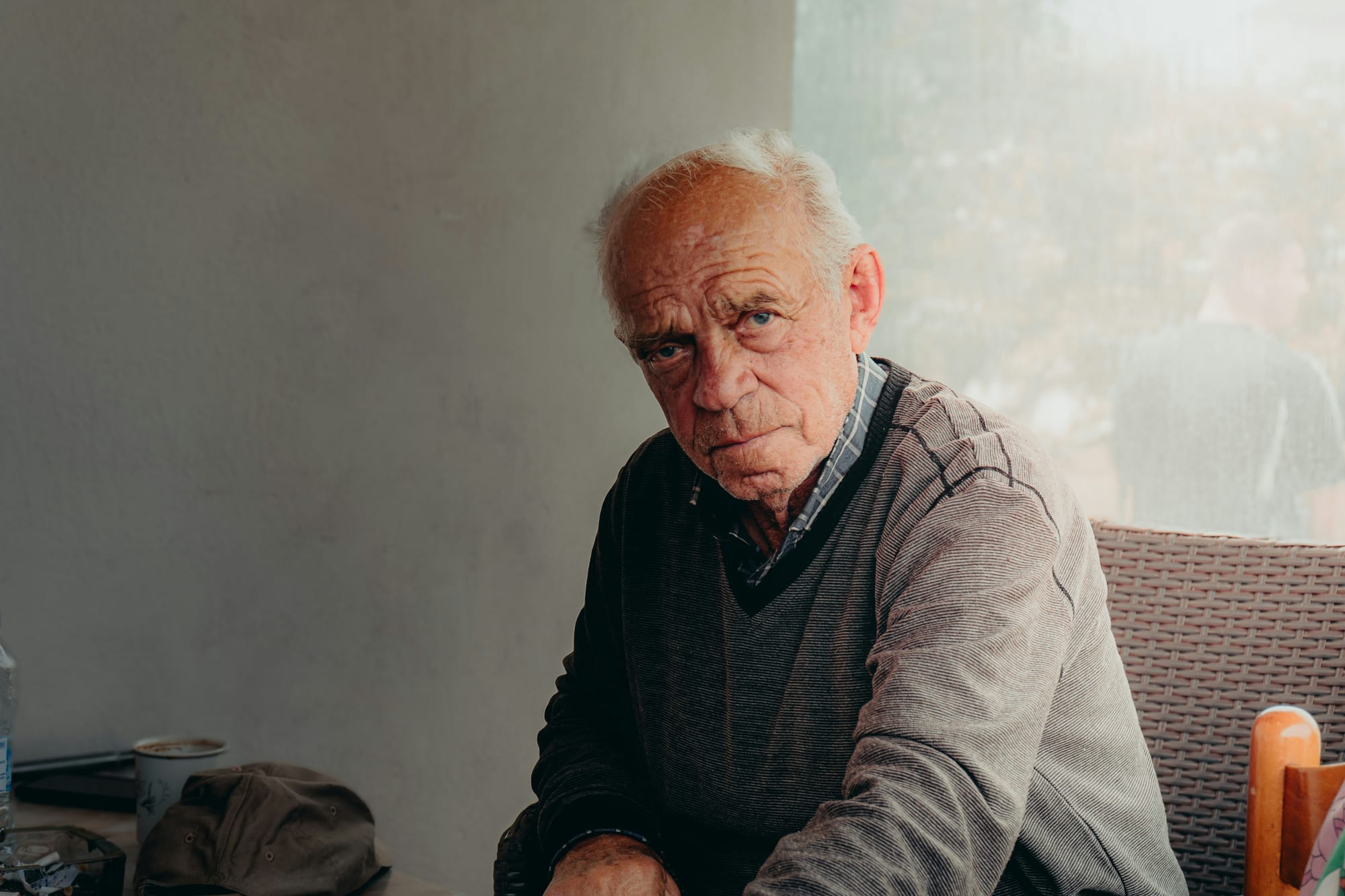
A: That is tricky. If you say, no, we're not going out, we're only staying indoors, that can be just aggravating, escalating the whole conversation. There is no one size fits all solution. What I often say to patients and caregivers is, maybe you should say, you want to go out? Okay, let's go out, I'm going to come with you. Just be part of that conversation. Or you can say, ‘Okay, you want to go out? Let's have tea and a snack, and let's eat something before you go’, and redirect to something else.
Remember, if somebody's home all the time, they may be very bored and if there's no stimulation, that can be the source of sundowning symptoms. Going for a short walk, either walking inside the backyard of the house or going right around the neighborhood can be a good idea, maybe not at a problem time. You have to be proactive, not reactive about walks and outdoor time.
I always tell the family to make sure you have a medical alert, with a name and phone number in case the patient escapes the house. Despite your effort, the person may still get out at the wrong time [like the middle of the night].
I've also mentioned to my patients and families to inform the local police department, and explain this is the situation. Tell them, ‘My dad has dementia. He has a tendency to wander. We have a life alert. This is his name. This is his picture. This is my number’. A lot of towns have a program for helping the older adults and community members.
Just to give an example, sometimes there are situations where a family lets the patient out and they follow the family member at a distance from the car or by walking. Eventually they meet them and say, ‘Oh, you're here, let's go together, let's walk together’. So, they were able to redirect [at that time].
The number one thing is safety, right? We need to make sure whatever you're going to do is safe for the patient and taking into account the situation, the time and place and everything. Sometimes it is really, really hard, and you are worried the patient may be at risk of safety or harm to himself or herself.
In that case, you might have to call 911 and say, I’m calling for my dad, he has severe dementia. He's very agitated right now. The dispatch will give directions, so they come prepared how to deal with the patient with dementia.
We don't want a knee-jerk reflex to always call 911. If EMS comes and takes the patient to the hospital. Then, the hospital emergency room is really not a good place for a patient with dementia and severe sundowning, because it can be more chaotic and cause more of a problem. [Caregivers should have medical paperwork in place].
There are a lot of unmet needs. Sometimes patients are doing well, but then more and more sundowning incidents are happening. Let's say, it’s November or December and you start to see more sundowning. Ask yourself what else is happening? Maybe the person had a fall, maybe there's unresolved pain.
There's a famous saying in dementia care: let's try to figure out what a patient or person with dementia is trying to communicate. We have to think like a detective. What is the behavior trying to tell us?
Is he or she trying to tell us there is unresolved pain? If there's a bladder infection happening, or the beginning of the flu, or strep throat, or maybe dehydration. Do an audit, maybe the person is not drinking enough water that particular day, and maybe there's more sundowning if they are dehydrated. We had to play detective and discuss with the healthcare provider, are there any unmet needs?
What also is a worrisome issue is that people are so much in search of a solution, they go to their local store and they get Benadryl or Tylenol PM and Advil PM
There's all kinds of over the counter medicines and supplements out there. Maybe it's the side effects of the medicine that's giving the problem. Sometimes a person goes to another doctor, and that doctor may not know the person has dementia. Then they prescribe medicine that's actually bad for dementia, and it may be causing the problem. I always want to make sure the medicines are not a problem. If there's recurring sundowning, or if there's a change in pattern, you definitely need to talk to a geriatrician, like me, or any other dementia provider, or their primary doctor, and explain this is what's happening. What are the unmet needs? Is there chronic pain? Is there dehydration? Are there new medications that have been introduced? What is the deeper context of what's happening?

Q: Can you clarify about over-the-counter or other medications like Advil PM Tylenol PM?
There's no safe limit to PM medications. No PM for older adults, regardless of whether they have dementia or not. I don't recommend Tylenol PM to any older adult after 60 or 65. PM means there this medicine has something in it called diphenhydramine. It's an antihistamine category of medication, and they can cause confusion, fall, constipation, dry mouth and more. There's a constellation of symptoms that can happen.
I tell them, checking with the pharmacist and the doctor and make sure before taking any over the counter medication.
Q: Can you sum up your message to the caregivers? Clearly, there's no easy solution.
A: I start the conversation of sundowning before sundowning happens, if somebody has started to have memory disorder issues. A memory disorder is like a coin with two sides. One side is memory difficulty, difficulty turning on the remote. Managing money or fixing meals. Then the other side of the coin is the behavioral side of things, like anxiety, agitation, confusion, restlessness, pacing, all of those things. I always try to prepare a family before it happens.
Sundowning is going to happen. Maybe it's not happening now, but that's where we're headed. Make sure we have a plan to adequately stimulate the patient during the day. Make sure we have a plan to adequately give rest to the patient at night. Make sure we have a plan to hydrate the patient well. Make sure we are only using medicine that's absolutely necessary. Make sure we engage, have a program or plan to engage. If sundowning happens, make sure we communicate, we talk to the patient very well, that we don't use words or phrases that can be triggersome.
We always monitor safety. If there's a safety concern, we may have to call 911. Make sure we have proactive things like a medical alert. Sometimes a family member or the caregiver may be in the backyard. Let’s say if the patient is at the front door, make sure there is a security system in the house when the door is open. If it chimes, the caregiver can know what's happening. Maybe you need security cameras and things like that. Proactive planning is the best way.
The one thing I want to make sure the family understands is that it's impossible to change the patient. We have to change the environment, and ourselves, the family, the caregivers. People [an individual with dementia experiencing sundowning] are not doing it on purpose. It's a neurological symptom.
There's no medicine for it. It's not like you can fix the sundowning. It's all about understanding the context, environment, caregiver, caregiver exhaustion, patient exhaustion. Have a plan. Being proactive, not reactive.
It demands a lot of creativity from the family. It's extremely hard. I don't want to make it sound like it is easy for the family. It is very, very hard. A lot of my patients' families are full of guilt. They think they should be doing things for mom or dad or siblings. I just want to reassure them they're doing their best. You have to balance caregiver health, their own burnout and patient's health. Caregivers are doing their best.
This interview has been edited for length and clarity.
Alzheimer's Association Resources:
The Alzheimer's Association 24/7 hotline
The Alzheimer's Association and Communication
Tips for successful communication during all stages of Alzheimer’s disease
Medical Disclaimer
All content available on and through Health Nation Media is for informational purposes only. Such content is not an endorsement of, or a substitute for, nor does it replace, professional medical or veterinary advice, diagnosis, or treatment. If you have any concerns or questions about your or others' health or the content available on or through Health Nation Media, consult with a healthcare professional. Do not disregard, avoid, or delay obtaining health-related advice from a healthcare professional because of content available on or through Health Nation Media. Use of Health Nation Media and reliance on any Health Nation Media information is solely at your own risk. For more details, see Health Nation Media's Terms of Use.