
Long-Form interview with N.Y. caregiver Barbara Weiss: Juggling care support to both her husband and her mother
Originally from Brooklyn, Barbara Weiss, 70, lives on Long Island, N.Y., with Dennis, 73, her husband of nearly 50 years, who received a diagnosis of mild cognitive impairment in 2023 and early-stage Alzheimer’s disease in 2026.
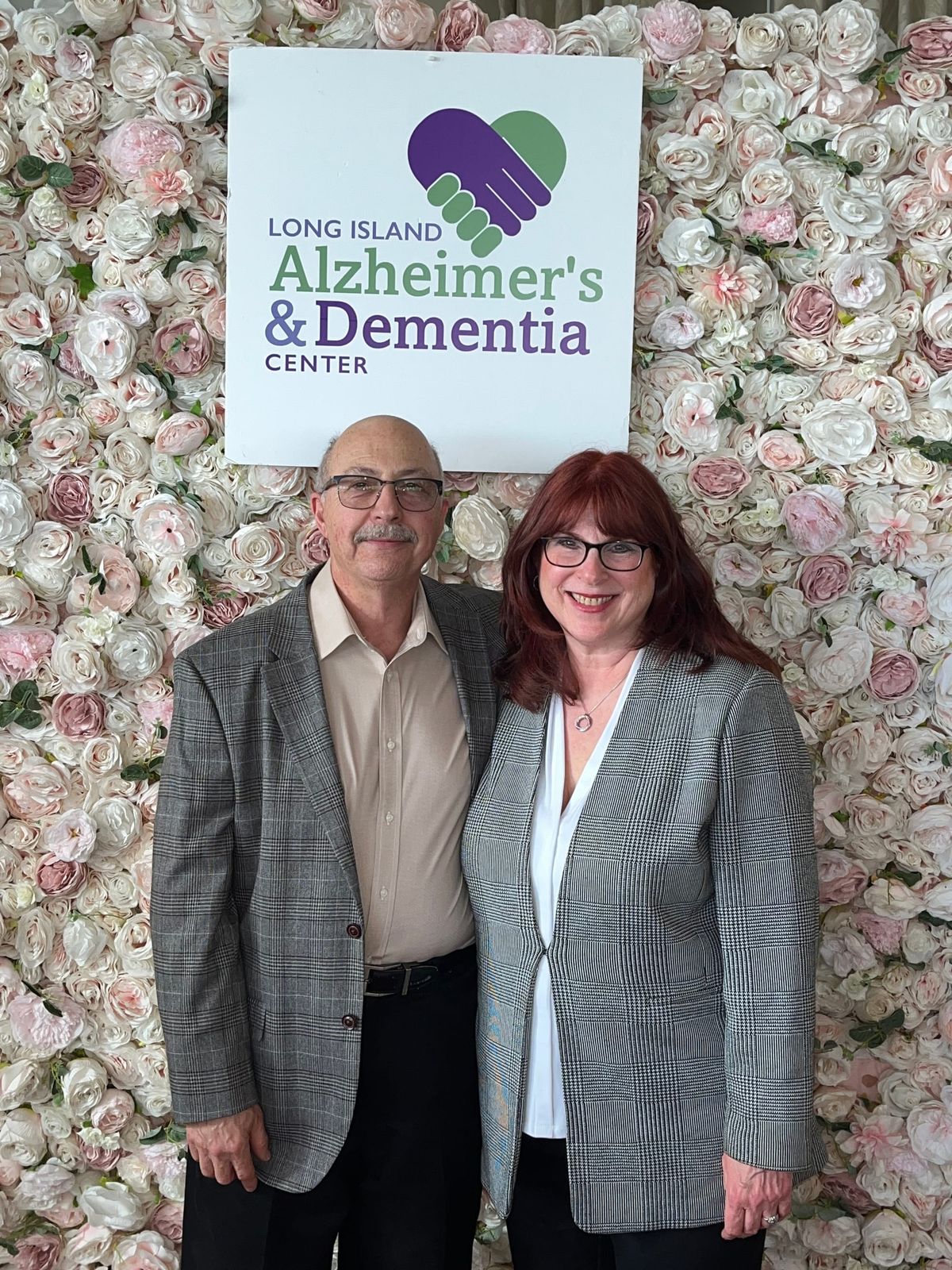
Originally from Brooklyn, Barbara Weiss, 70, lives on Long Island, N.Y., with Dennis, 73, her husband of nearly 50 years, who received a diagnosis of mild cognitive impairment in 2023 and early-stage Alzheimer’s disease in 2026.
Weiss is also a caregiver for her mother Yetta*, 92, who lives on Long Island in a nursing home. Weiss retired about two years ago after a long career working in the banking and financial institutional services field.
Q. Can you tell me about your caregiver journey?
A: My grandmother suffered from dementia, and my mom suffers from dementia. My aunt suffered from dementia. It runs in the family. A lot of these older generation folks don't get tested. They just say, ‘Oh, I can't remember,’ and that's it.
Q: How did you get involved with the Alzheimer’s Association?
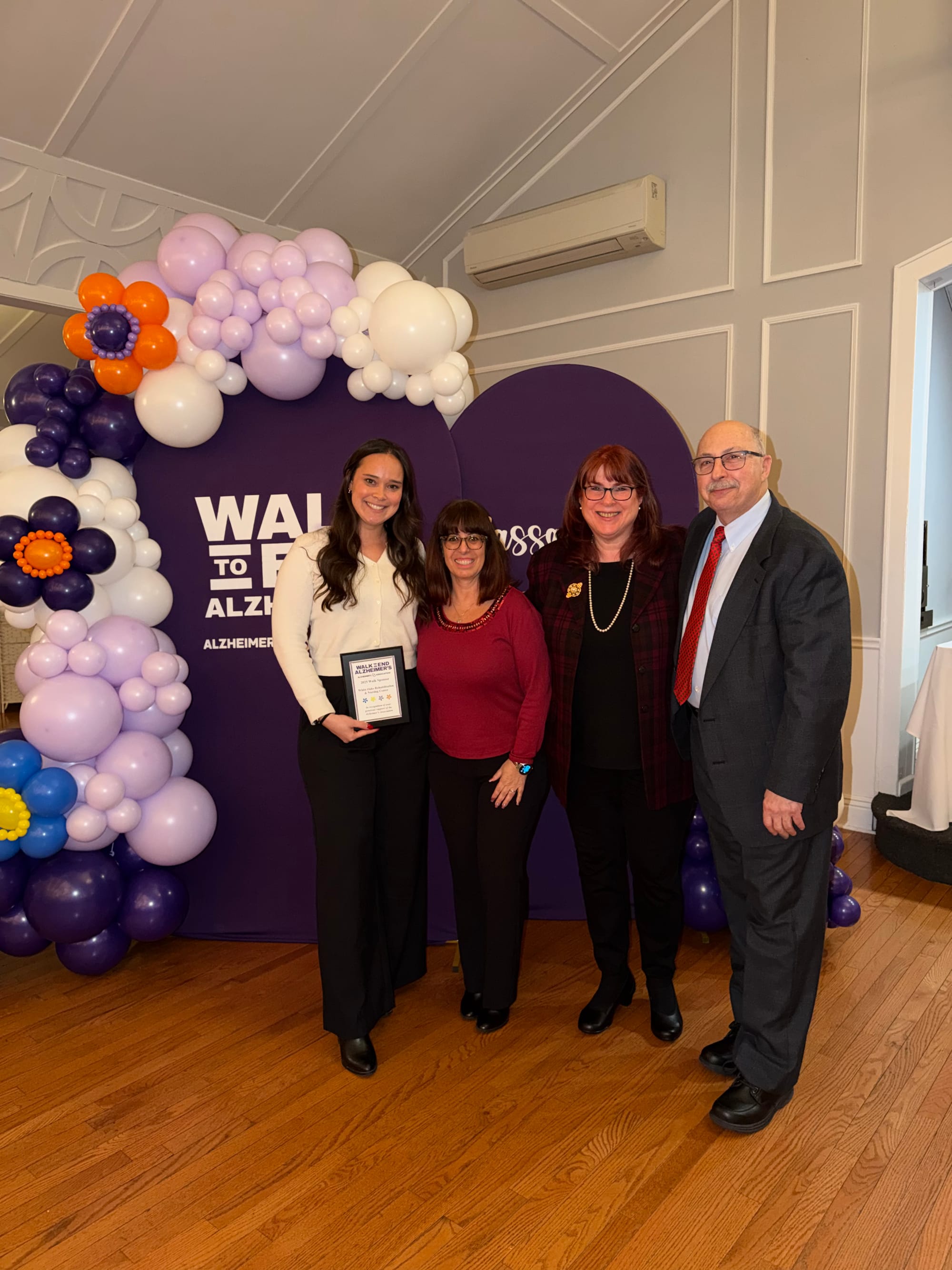
A: I was always involved in advocacy. While I was at a bank that I worked for, they had an employee network for disability advocacy. I got involved more deeply with the Alzheimer's Association of Long Island because I led a lot of volunteers, groups at various Alzheimer's Association walks. I used to host a table, and I also volunteered at their walks doing various things that they needed me to do. Interestingly, this was way before my husband received his diagnosis.
Q: Can you speak about the circumstances around your husband’s Alzheimer diagnosis?
A: My husband has always had problems with his memory. Always. This is not something new for me. And I've sort of learned to live with it. A few years ago, he started complaining that he couldn't remember names. He never could really remember names, but then we'd go to a friend's house for dinner, spend the whole evening there, and 15 minutes later, he'd say, “I can't remember the name of the person who just hosted this dinner. And I felt really bad about that.” And this was happening more frequently. So, I was involved with the Alzheimer's Association from an advocacy perspective and then sort of morphed into the caregiver role.
Q: When was your husband tested?
A: He’s 73, and he actually started taking these tests about three years ago [in 2023 at age 70].
Q: Tell me more about some of the tests your husband Dennis had to take?
A: I got him to see a neurologist, and I got him to agree to take some tests. A neuropsych test. He had a brain metabolic PET scan, and then he had a PET/CT scan for amyloid plaque. Those were the three tests that he took.
And he didn't do very well on any of them. In fact, the brain metabolic showed that he had a cerebral atrophy possibly leading to dementia.
The amyloid plaque PET scan showed that he did have amyloid plaque. The neuropsych … did show memory deficits, tremendous memory and cognitive deficits. So we reached out to the Alzheimer's Association and got the name of a very good doctor here on Long Island. Earlier this year, in late April 2026, for [Dennis’s intake with the specialist], they administered a Montreal Cognitive Assessment (MoCA).
Q: Had he taken this test before?
No, but it's similar to the neuropsych. … Both of them say, “Draw a clock.” He couldn't do it. [The second time] he was told to draw a clock, he did much better. I was kind of shocked, actually, but he did much better, but still not the best. It wasn't what it should be.
[Next], he did some genetic testing blood test to determine his gene profile for potentially taking infusions. He also took a PET/MRI test, sort of a baseline test. The gene test enabled him to be eligible for infusions, which is a good thing … [They are] in the insurance approval process for infusionsn through Medicare. So this has been a journey that started about three years ago. He's in the mild cognitive impairment stage [of Alzheimer’s].
Q: Tell me more about your husband’s family history. Did he have any family members with a history of dementia?
"Yes, his grandmother on his maternal side. I don't know that she was ever diagnosed. Back in the day, I'm not so sure they even had the methodology to do it back then. But she had severe dementia [toward the end of her life when she was in her 80s]. She didn't know her own granddaughter. … They'd say, “Well, this is your granddaughter.” And then 10 minutes later, she’d ask her granddaughter, “Who are you?” So, she literally couldn't remember anything past 10 minutes."
Yes, his grandmother on his maternal side. I don't know that she was ever diagnosed. Back in the day, I'm not so sure they even had the methodology to do it back then. But she had severe dementia [toward the end of her life when she was in her 80s]. She didn't know her own granddaughter. … They'd say, “Well, this is your granddaughter.” And then 10 minutes later, she’d ask her granddaughter, “Who are you?” So, she literally couldn't remember anything past 10 minutes.
Q: Has anyone ever said anything unkind or insensitive to you following your husband’s diagnosis?
A: When I said that Dennis was diagnosed with Alzheimer's, someone would say, “Yeah, I kind of figured.” You know, that type of thing. Well, that to me would be a little bit rude. … They're just telling me what they have seen and that the diagnosis has affirmed their suspicions.
Another couple, who happen to be doctors, when I told them that my husband was diagnosed with Alzheimer's, they said, “I know.”
No affect whatsoever. Not like, “Oh gee, that's terrible.” Maybe because they're doctors, and for them, everything is very medical, and who cares, right?
But when I tell people that my husband has Alzheimer's, they'll go to me, “Oh, I'm so sorry. Very sorry. I'm sorry about that. That must be difficult on you.” That is a nice thing to say to somebody to validate the journey that somebody's about to go through with somebody that has Alzheimer's.

Q: How are you doing with your caregiving journey?
A: It’s very hard on me, actually. I got used to it. … I'm very resilient.
I'm a very strong person, so I get used to these things. It's always been a difficult thing for me to not be able to share with my husband certain things that I enjoy. He can't remember things. You can't change what is.
And I have other friends that I go to concerts with or I'll talk about some of these things with them. It would be nice if it would be with my husband, but … it takes a lot to answer the same question multiple times. What can I do about it? Nothing. I have to be supportive of him.
Q: Tell me more about caregiving for your 92-year-old mother?
A: I am her caregiver, so she is my responsibility. I worry about my mom. My mom has dementia. She doesn't always remember things. And she also has a very active, I don't want to say … hallucinations, but, you know, she thinks things have happened that may not have happened. And I have really nobody, the only one who helps me with my mother is my husband. He's wonderful. He comes with me to see [my mother]. And if I need a second person to help me for some reason, I can always rely on him.
My brother lives in New York City, but he works full-time. My sister lives in Pennsylvania, so she's not around the corner. So I really don't have a familial support system here. My daughter lives out of state, so a lot of it … falls on me.
Q: Do you go to any support groups?
A: The Alzheimer's Association started a support group for patients and caregivers back last year in 2025. It met in a library, and it was great, because … we got the women and the men who are the spouses of those with Alzheimer's to really talk about issues and vent. “This happened to me. And why doesn't he ever close the closet doors? Why does he leave the lights on?” … So it was a good place to vent, but then it ended. But a group of us decided to get together outside and meet separately, so now we have a [self-organized] support group that meets [in person]. It was very helpful. … Yes, I do have friends in this support group that are going through similar issues.
Q: What is your husband doing now?
A: He’s running around the house doing whatever. He just mowed the lawn. I mean, he's just puttering. My husband's very, very capable. He does complex photography, digital photography … and he sings in a male barbershop chorus. So he does a lot of things. …
My friends in this group that I go to, their husbands can't drive anymore. They can’t handle finances. They can't remember where they put stuff.
Dennis is not like that. If you question him … because he's a comedian … he's good at hiding it. And a lot of times, I have to finish his sentences. When we're with people, he'll give them incorrect information, because he can't remember it.
And I hate correcting him when we're with people, because I don't want to be disrespectful to him, but I also don't want him giving incorrect information to people. Do I say something [if] he said something completely wrong, or do I correct him and make him feel stupid in front of people? I never know what the right answer is, to be honest with you.
Q: Have you experienced any health issues of your own, including physical and mental health?
A: I’m in fairly decent health now. I have high blood pressure and you know, cholesterol. I am a new diabetic, because I put on some weight, and I wasn't exercising, because I'm caregiving.
I broke my knee 13 years ago, and my husband had to caregive me [prior to his diagnosis] because I couldn't walk. I learned to walk again from scratch. I lost all my musculature. And I had to relearn to walk again, and went to physical therapy. It was horrible, but my husband took care of me like nobody's business. He was amazing.
Q: Can you speak to the financial impact on your household from treatment for Alzheimer’s disease?
A: Medicare has been good covering everything so far. We have a supplemental plan, which we pay for every month. From a financial perspective, we're told what's not covered, then we don't do it.
If we get approval for Medicare to take the infusions, they're responsible to pay 80 percent. And according to what I understand about the supplement, if it's a Medicare eligible expense, meaning the supplement must by law cover the [remaining] 20 percent, less a $20 co-pay for any type of office visit.
When it comes to my mother, she is living in a nursing home and that is covered 100 percent [through both Medicaid and Medicare health plan coverage].
Q: As a caregiver, what kind of medical information do you want to know? What news or research articles are helpful to you?
A: One of the things that I would love to see in medical articles is a summarization of where we are versus where we're going. It would be nice if an article said, “Yeah, there's a new blood test, but heretofore … people had to use this test and that test and do this and do that in order to make a diagnosis.” And then look at what they now have.
I think that articles are written from the point of view of the new treatment, but they're not really summarizing what people have had to have gone through historically in order to get a diagnosis.
So, as a caregiver, you have to continue to be yourself and find balance and find, I’ll call it a caregiver vacation to keep your mental health and your emotional wellness, because it's easy to fall into a rabbit hole of “woe is me.” And it's easy to complain about things. You can't control what happens, but you can control how you react to things, and how you do things. So, I always keep that in the back of my mind.
From a caregiver perspective, the articles that I read are pretty good. One of the things that I take out of these articles is that it's like the old oxygen on the plane. If the oxygen [mask] falls and you're sitting next to your child, you better put it on first because you can't help that child if you're not wearing the oxygen [mask].
So, as a caregiver, you have to continue to be yourself and find balance and find, I’ll call it a caregiver vacation to keep your mental health and your emotional wellness, because it's easy to fall into a rabbit hole of “woe is me.” And it's easy to complain about things. You can't control what happens, but you can control how you react to things, and how you do things. So, I always keep that in the back of my mind.
Q: Any final thoughts you want to share?
A: My husband is a great husband, and he's a great person. You have to take the good with the bad, right? When you take vows, you know, in sickness and in health, and I take my vows seriously. So it's not always easy, but it's a commitment. And that's what it is. And I love him.
* “Yetta” is a nickname for privacy purposes.
This Q&A has been edited for length and clarity.
Medical Disclaimer
All content available on and through Health Nation Media is for informational purposes only. Such content is not an endorsement of, or a substitute for, nor does it replace, professional medical or veterinary advice, diagnosis, or treatment. If you have any concerns or questions about your or others' health or the content available on or through Health Nation Media, consult with a healthcare professional. Do not disregard, avoid, or delay obtaining health-related advice from a healthcare professional because of content available on or through Health Nation Media. Use of Health Nation Media and reliance on any Health Nation Media information is solely at your own risk. For more details, see Health Nation Media's Terms of Use.