
Long-Form interview with Kelly Glover on Alzheimer's and family caregiving in N.J. and P.A.
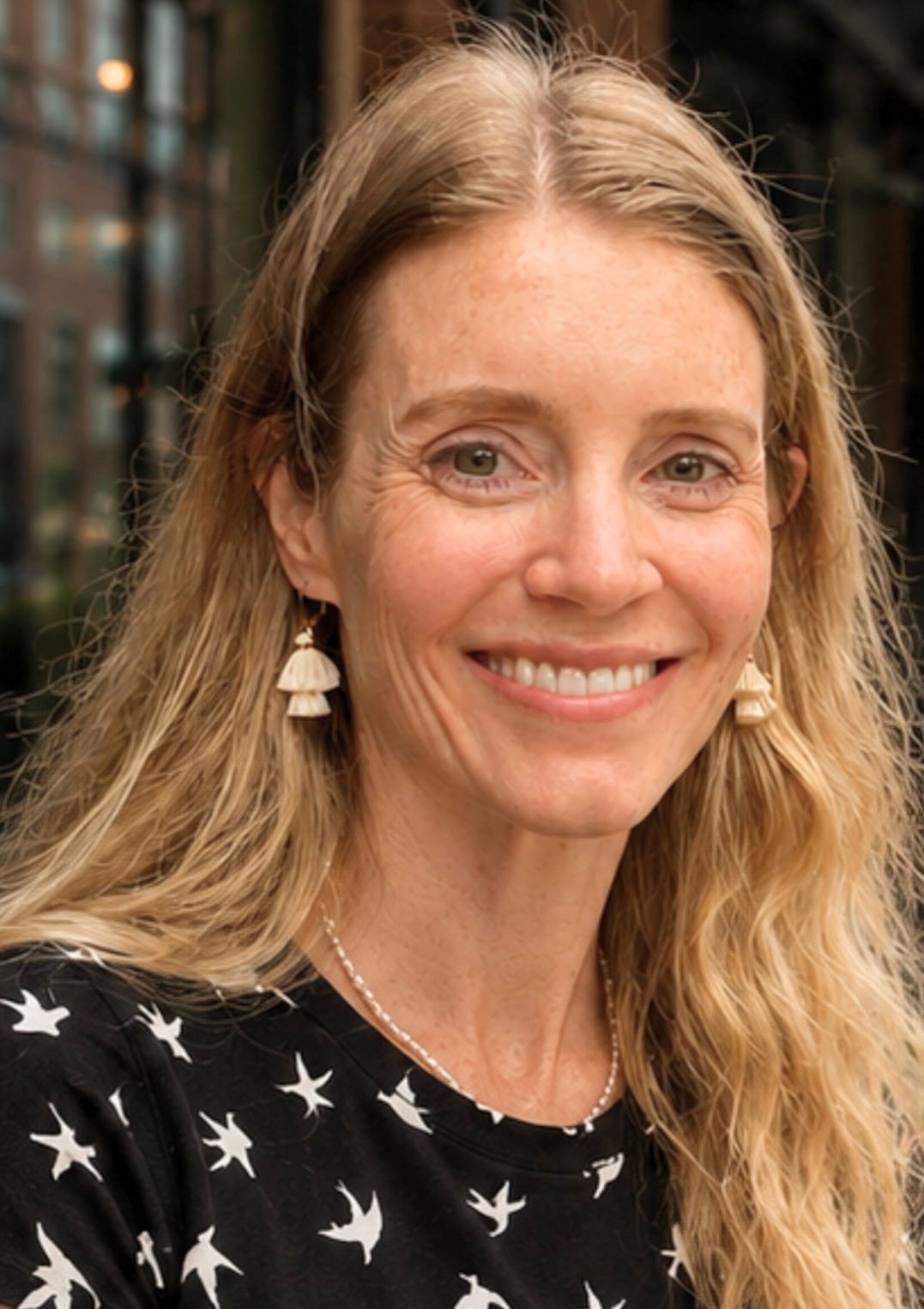
Kelly Glover is a co-caregiver with other relatives for her father who is aging in place with Alzheimer’s disease in N.J. Glover is a Congressional Team ACT Member, part of the Alzheimer’s Impact Movement (AIM), the sister organization of the Alzheimer’s Association.

Q. Tell me about your father.
A: He founded and owned an auto repair business for nearly 40 years. My dad is my hero and he’s always been. He worked super hard during the week, and then he would dedicate his Sundays to [sports], like we're going to the soccer tournament or we're going to this field hockey clinic.
He really took that time with me. … Some of the best moments as a daughter I think I had were in his truck with him, driving to one of those events and sharing either camaraderie, something that happened on the field or a song on the radio that we both liked, and we would put the windows down. Yeah, it's a great feeling, I think, to have as a child, to feel like you made your parents proud … It’s a special memory.
Q: Tell me how your father was diagnosed with Alzheimer’s disease?
A: Several years ago, [my father] had been experiencing some fainting spells. He was referred by his primary care physician to both a cardiologist and a neurologist. They went to the University of Pennsylvania's Memory Health Center, where they did assessments. They [were] looking for any signs of dementia, performing scans, and ultimately diagnosed him with Alzheimer's disease. And in conjunction, he was given a pacemaker for his cardiovascular condition.
It was this curveball that no one, I don't think, in my family or in our network ever imagined. It was just really difficult … really difficult. … My parents sat us down that day, but I went home in the car and I wasn't ready to actually think about what it meant. I didn't want to. I was like, "No, not my dad. No.”
Q: Can you tell me more about your father’s treatment journey? Have the doctors diagnosed him with a specific stage of Alzheimer's?
A: He's approaching middle-stage Alzheimer's. He is transitioning from early to middle stage, and probably the outcome we'll have this fall [2026] is that he's officially entered the middle stage of Alzheimer's.
I think Alzheimer's is somewhat misunderstood a lot of times. And it is often not diagnosed early enough, where someone can really benefit from the powers of early intervention that therapies provide now, but … I truly feel like grasping what the impact of an Alzheimer’s diagnosis means to someone with Alzheimer's and what it means to someone without [Alzheimer’s] are two different things.
I cannot put myself in my father’s body and it's not for me to define what happiness or revisiting a memory looks like for my father, but just to help him find joy or contentedness in his daily life. … We’re able to … support him in doing [what he wants to do].
Q. Is your father still doing the infusion therapy and is that treatment helping him?
A: Yes, he is still actively receiving infusion [therapy] and we remain hopeful in the power of the innovative medicines now available to slow the progression of the disease. [Note: Glover said her family and her father's medical treatment team will continue to discuss and consider all appropriate treatment options.]
Q: Have you experienced any insensitive comments or experiences that could be teachable moments as it relates to Alzheimer’s or dementia?
A: Yes. It was a casual, regular day in a professional setting, and this person started talking about how they felt like they had Alzheimer's, and they were nonchalantly having a conversation with another coworker and joking about how they're forgetting things, and they just put this phrase on it, “I feel … like I have Alzheimer's,” and they were talking and laughing. … I didn't expect it, and I think that's why it caught me so off guard.
They don't realize that you can hear them or maybe they just forgot. … But to put it in perspective, I just was like, no one would ever walk around and be like, “Oh, I feel like blood cells are … mutating inside my body today.” Like saying, “I feel like I have cancer.” … You don't do that, and … mocking a very serious disease state—and dementia at any level is something that's very serious—it just… it hurt.
It changed my perspective of what conversations people really do need to have and accepting that it's not a personal thing. And you know, I'm not perfect either. … I guess if I had the opportunity, I would tell this person I did hear that. I think they would care and they would [say,] “Oh my gosh, I didn't even realize I said that.”
Q: What do you think is often misunderstood about Alzheimer’s or dementia, particularly when it comes to being a caregiver and family member of someone with the disease?
Q: Any advice you would give to someone who is going through a similar caregiver journey of a loved one who has been diagnosed with Alzheimer’s disease?
A: “It's okay to say, “I'm not okay.”
This Q&A has been edited for length and clarity.
Medical Disclaimer
All content available on and through Health Nation Media is for informational purposes only. Such content is not an endorsement of, or a substitute for, nor does it replace, professional medical or veterinary advice, diagnosis, or treatment. If you have any concerns or questions about your or others' health or the content available on or through Health Nation Media, consult with a healthcare professional. Do not disregard, avoid, or delay obtaining health-related advice from a healthcare professional because of content available on or through Health Nation Media. Use of Health Nation Media and reliance on any Health Nation Media information is solely at your own risk. For more details, see Health Nation Media's Terms of Use.