
When it’s time to say goodbye to your ill or dying pet: navigating whether in-home animal euthanasia is the right option for your family
Jason Doll, DVM, MPH, is an end-of-life and hospice veterinarian, who works for Lap of Love, a company that specializes in pet euthanasia. Doll said it is his mission to try to bring peace and comfort to all of the families he works with during a heartbreaking time.
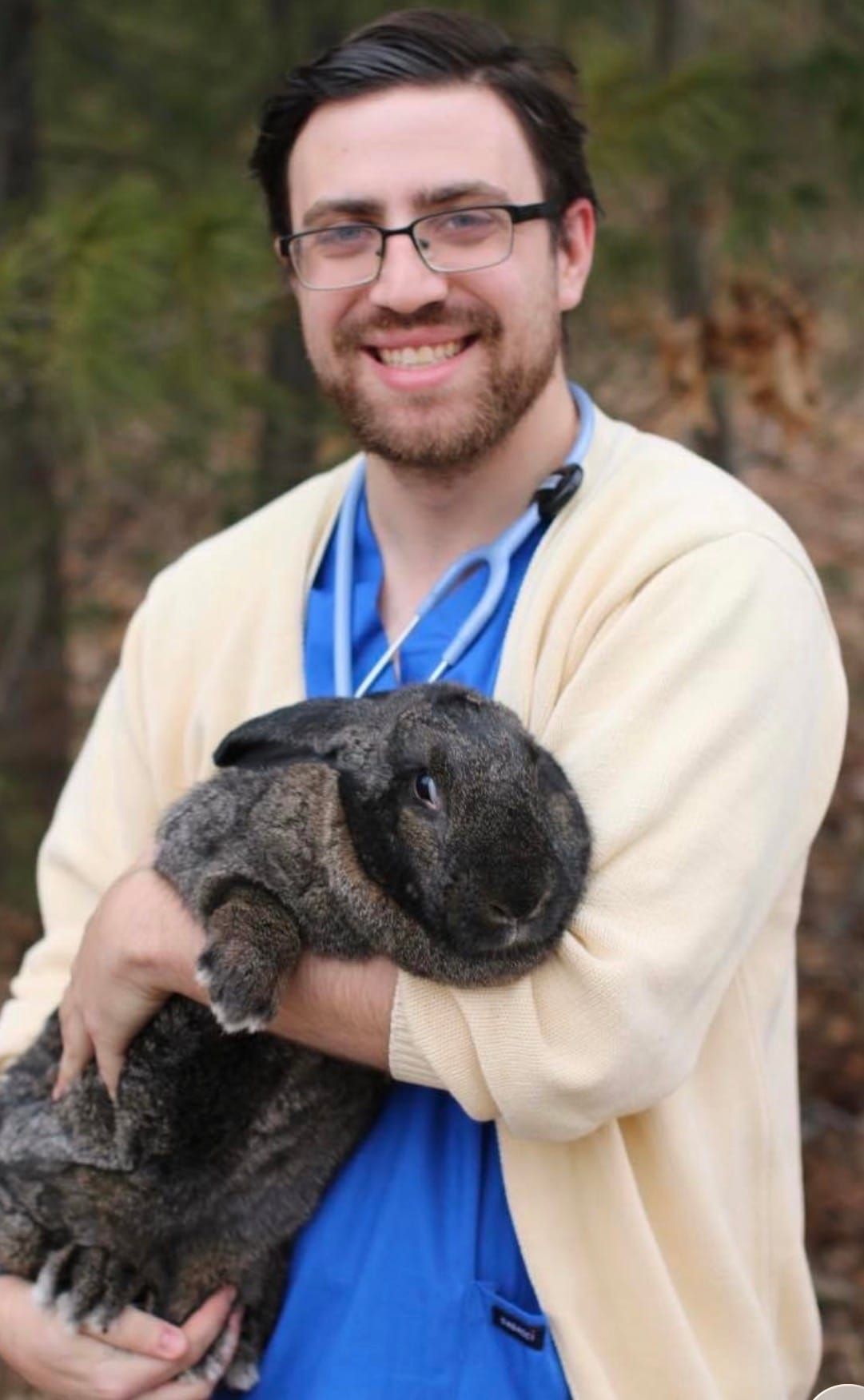
Originally from Pennsylvania, Doll works in Portland, Maine, as a veterinarian who works to provide compassionate in-home pet euthanasia services for dogs, cats, rabbits and a variety of other pets, when they transition over the ‘rainbow bridge’.
Doll, who has a Doctor of Veterinary Medicine (DVM) and a Master of Public Health (MPH) dual-graduate degree, said that he hopes people will stop using the term 'put to sleep' or 'put down' when it comes to pet euthanasia. According to Doll, the term can be confusing, misleading and even emotionally painful when it comes to pet parents who are either considering pet euthanasia and/or grieving the loss of their pet after a pet euthanasia procedure.
Q: Please tell me more about Lap of Love.
A: Lap of Love is in 40 states and in some provinces of Canada. We are 450 veterinarians strong, with twice as many support staff. At Lap of Love, we really want to celebrate your loved one, in the twilight, days, weeks or months of their lives.
We mainly provide in-home euthanasia for pets, but we also have in-home hospice and telehospice. What I think sets Lap of Love apart is our support center, our post-pet euthanasia comfort care team. The folks that answer the phones, the pet loss support team will help you. They are available to be on the phone with you for 30, 40 minutes for a certain time period following the loss of your pet.
Of course, our medical veterinary team will help you through the actual procedure, the days leading up to it, the days afterwards, but then the pet loss support team, those are death doulas, those are counselors to help you for days, weeks, years afterwards, as well, and so it's a really vibrant group of those that really care not only about the pets but their people too.
Q: Thank you for telling me more about Lap of Love. Can you please define the term pet euthanasia?
A: A euthanasia originates from the Greek words meaning ‘a good death’. That is a controlled, peaceful, anesthetic procedure that ultimately is an irreversible cause of death for a living individual.
Q: What is palliative care? What is hospice care? What is the difference between the two?
A: With hospice, you need a diagnosis to enter hospice. In human medicine, hospice care is all insurance-driven. It's not as applicable in veterinary medicine, just since insurance is becoming more common. With palliative care, sometimes we don't have a diagnosis with veterinary medicine. Sometimes we know we have pain, we know we have inappetence [nausea, a loss of appetite or fear].
[Editorial Note: when a dog, cat or other pet has an extreme reduction of appetite, stops or loses interest in eating (and/or refuses drinking water when it customarily would drink water in the past) and/or has physical difficulty eating or drinking water, these are all issues that require a consultation with a veterinary professional as soon as possible].
We don't want to put our loved ones through any more lab work, or diagnostics or anything like that.
We just want to focus on what we can do in the home to help [the pets] quality of life. That's where palliative care comes in. It's a term that most people aren't too familiar with, but that's more comfort care, vets at Lap of Love use, rather than hospice care. Hospice is a nuanced term and a more of a human medicine term, which is why I think we use it a little bit more often, because more people are familiar with the term hospice versus palliative. The term palliative care from a veterinary context is to help alleviate pain.
Q: What is the Lap of Love origin story? Was there a huge unmet need when it came to available services available in veterinary hospitals, vet emergency rooms and vet practices?
A: Let me tell you the story of why we're even called Lap of Love. Picture this: Florida from fifteen years ago. Dr. Dani, who is our co-founder, was working in a Florida vet ER. A dog mom was saying goodbye to her pet. She said, ‘I really don't want to put him on the exam table. Could I have him on my lap?’ And Dr. Dani said if that's where he's most comfortable, absolutely.
I think the Lap of Love difference is really hearing the family, seeing the situation, and knowing that going to a veterinary clinic, especially for those final moments, is stressful for everyone. It’s stressful for the pet. It’s stressful for the people, stressful for the staff too. Of course, you create relationships with your general practitioner where you're doing your preventative care. But to do a euthanasia in a clinic is really tough for everyone involved.
This provides an alternative. We're always going to have in-clinic veterinarians, thank heavens, because they're amazing. Emergency vets, urgent care vets, surgical care vets, specialty care and other veterinary care.
Lap of Love is just an alternative for families that really want to be able to do it at home. There is a cost that comes with it. What you get in that is a whole group of people that are going to become a part of your family that are gonna treat you and your pet as if we've known you your whole lives.
What attracted me to Lap of Love is their bedside manner, and just how they treat everyone. Even those that are just inquiring about the work they do or who are struggling with this position.
Q: When it comes to Lap of Love services is there a starting price range that you feel comfortable sharing?
A: I can't speak for all the states that we're in, but in Maine, pet euthanasia services start about $500, with additional fees that are a few hundred dollars more for cremation and burial. There are [price] variations depending on the size of your pet and how you would want your angel returned to you. Care credit is an option.
Lap of Love has communal cremation, at least with the crematory that we work with in Maine, where your angel becomes part of a natural habitat. [Different locations have different location options].
Another option is private cremation meaning that you would get your angel back 100% to you.
One of my duties is to, to be a liaison, between the family and the crematory. I have the honor to transport your angel back to my home, for a day or two. Then, the crematory comes to collect the pet’s body twice a week.
I have the very unique duty to transport deceased angels with me multiple times a day. To feel, sustain what I do, continue what I do, brings me back to my [late] mom. We both had a love of music.
I always ask all my families before I leave, besides, ‘Would you like a hug?’ The last question I ask is what song would you like me to play for them. I've curated this list called Angel Road Radio, where each day I play a different song. I think music is a beautiful way to take your pet.
Usually, I try not to only offer my choice, because then we would be playing [Frank] Sinatra and Dolly Parton all day. I've certainly discovered some more, some music and gone outside of what I previously listened to. I discovered Bad Bunny through Angel Road Radio, so I'm very thankful for that. It's just a really great way to connect with the family. I think it really lets people. The biggest thing about loss is how we continue the bonds. How do we continue this relationship even without their physical presence?
Q: When you say struggling with this position, what do you mean?
A: The families that reach out to [Lap of Love]. Sometimes they haven't even been to the vet yet, or have no interest in going to the vet or their pet hasn't been to the vet in a few years. The families are [seeing] their pet slowing down. The [pet’s] quality of life is just not where we want it to be.
Let's talk about our options.
[Lap of Love offers some pre-appointment worksheets, including a Pet Quality of Life Scale worksheet and additional information resources. None of the information online can take the place of a veterinary professional consultation or aftercare services].
Q: Can you tell me more about what kinds of conversations you might have with a new family or what the process is with a family where you already have established a professional relationship?
A: When I get there, sometimes the family wants to pursue blood work or they want to pursue palliative care or comfort care. But, sometimes the families say, they've had a good run, the [pet] has had a good 16 years. We just don't want their quality of life to get any worse.
There are certainly families where we've had to adjust our goals. They thought that it was the end. But, then from the records that I'm seeing, from the pet that I'm seeing, perhaps we could try something. I could come back tomorrow if it doesn't work. Some families say, we're not ready yet. We don't know when we'll ever be ready. Even just talking to me, they call the next day and say, that provided the clarity that we needed to move forward.
My longest hospice patient right now is a bunny. It'll be three years this month. The family changed what their goals were. They [initially] said, ‘We're not gonna put him any, through any more procedures. He's had at least five or six procedures since I [last] saw them. We adjusted some things and made him more comfortable and made him a better anesthesia candidate.
My role as an end-of-life care veterinarian is not to sway decisions. It's to give recommendations and provide peace.
Q: Any closing thoughts on pet euthanasia, pet loss or anything else you want to share?
People can have a lot of opinions about veterinarians, but I think a common word that they would use is trust. For anyone in healthcare, but especially veterinarians,. We are at people’s sides during the highest and lowest points of not only their lives, but of course of their pets.
A really big thing that I would love, and if you could put this in big words for all to hear, to really eradicate the word ‘put down’ when it comes to the loss of your pet.
I don't know who started that. I don't know the origin of the term.
I think it's just the sense that [pet] euthanasia is a bad thing. That [pet] euthanasia is giving up. I understand some of the sentiment, but at the same time, I always try to refocus my families to think, it's not putting down, it's providing peace. It’s lifting them up, raising them up, depending on how spiritual you want to be.
I think providing peace is how to think about it. Think, “we gave him peace” after a long-fight with cancer. Or after many wonderful years with our family, “we provided them peace.” Or things just happened really quickly, and “We had to provide them peace or to lift [our pet] up.”
One of my biggest professional goals is to change that verbiage. Of course, it's devastating to lose a family member, especially a pet. But you're not hurting them. You're not putting them down. You're giving [your pet] the greatest gift, another living thing can give another. Peace.
This Q&A has been edited for length and clarity.
Medical Disclaimer
All content available on and through Health Nation Media is for informational purposes only. Such content is not an endorsement of, or a substitute for, nor does it replace, professional medical or veterinary advice, diagnosis, or treatment. If you have any concerns or questions about your or others' health or the content available on or through Health Nation Media, consult with a healthcare professional. Do not disregard, avoid, or delay obtaining health-related advice from a healthcare professional because of content available on or through Health Nation Media. Use of Health Nation Media and reliance on any Health Nation Media information is solely at your own risk. For more details, see Health Nation Media's Terms of Use.