
Long-Form interview with caregiver Nancy Chandler: putting advocacy at the forefront
A long-time volunteer with the Alzheimer's Association, Chandler is working to raise awareness on dementia research, funding and treatment outcomes.
Q: Tell me more about your caregiver journey with your husband?
A: This is my second caregiver journey. First, my mom [was diagnosed with Lewy body dementia in 2013].
In 1999, when I first introduced my mom to my [then] future husband, John, we were at an event where there was dancing. I'm not a great dancer, but my mother and husband are. They had a blast on the dance floor. I knew she loved him from that moment forward. We have now been married for 24 years.
My husband is an expert sailor, it’s a passion of his, not his career. We ski, we travel, and hike. He served on ski patrol. He’s a sailor. He’s a runner. He’s very independent. Previously, my husband was a marketing executive with some major corporate corporations, like Visa and Mastercard. We don't have any children. We have nieces and nephews and sisters on both sides, my husband's side, and my side as well.
[In 2024], I noticed my husband [John, now age 78] was forgetting conversations that we would have–important conversations, like money, assets, some big decisions. The next day it was as if we never had that conversation. Initially, I would say, "You never listen to me.”
After a while there were other little signs. My husband was so good technology-wise, and all of a sudden, he was beginning to have trouble with his computer. It was confusing him. I said, "You know, I'm a little concerned about what I'm seeing. I'd like to get you tested.
He agreed. Most people don't want to know or they would say “No. I'm fine. It's just stress or whatever.” Fortunately, he was willing to do that and didn't resist the idea. We went to the Stony Brook Center of Excellence for Alzheimer's Disease.
Everything I'm doing now is because I learned so much through my volunteerism with the Alzheimer’s Association.
My husband had some cognitive testing [in June 2024], and his numbers were lower than what would be considered normal. The doctor recommended that we get an amyloid PET scan of the brain, which would either rule in or out Alzheimer's. And unfortunately, there was confirmation that he has amyloid on the brain, which is a marker for Alzheimer's. My husband has what they call mild cognitive impairment (MCI) [that may lead to an Alzheimer's diagnosis].
Initially, we were hopeful because since my mom was diagnosed in 2013, there's been a lot of encouraging progress made. It's only for people in the earliest stages of the disease. Once someone's further along, the treatment is not an option for them. [After more testing and discussions with our doctors], my husband was at higher risk for the side effects of those treatments. We've been looking at research trials. We have not yet been successful on that.
Now, I handle all the finances. I handle all the doctor appointments. My caregiving is on a very early level. I'm taking on more of the day-to-day management of the house. For example, my husband might pay the bill twice, or he might forget to pay it.
What breaks my heart for my husband, John, is that he was a really proficient sailor. He was really proficient at household projects and handyman stuff. We've seen his decline in those things.
Now, he gets confused on how to do it, or he'll do it and it's wrong. And when that happens, he is aware why it's happening. It's extremely heartbreaking for him and emotional for me to see him. He was proud that he was proficient in these things. Now he's struggling. He worries a lot about the burden on me.
My husband is 100% independent. We are still very physically active. Fortunately, we're able to travel, but you know, we both know the path that we're going down.
There's been a lot of research that points to a healthy lifestyle in terms of eating a healthy diet, staying away from highly processed foods, exercising regularly, managing any diabetes or high blood pressure, not smoking, you know, limiting alcohol, staying socially and cognitively engaged.

My husband's been a huge athlete. He was a runner. We ski. We've done mountain biking. We've done so many physical things. The doctor really believes this particular gene that [my husband] has, most people start to show the symptoms in their mid-60s. He didn't show the symptoms until his mid-70s. The doctor really believes that his healthy lifestyle probably gave him some protection against the cognitive decline from showing up sooner.
Q: That sounds really challenging. I am so sorry to hear everything your family has been going through. Is there any history with your husband's family?
Not that we're aware of. His dad died young of cancer. His mom started having some cognitive issues, but not until her late 80s. We're kind of thinking it was more vascular in nature, because she had strokes and other health issues.
My husband does remember now– in retrospect–years ago when my husband was a teenager, [that] his grandfather didn't know who he was at one point. My husband’s grandfather said to John's father, "Oh, he's such a nice young man. What's his name again?”
And my husband remembers that. He didn't tie it back to Alzheimer's or any other form of dementia, until he found out about the genetic connection. Then all of a sudden, he realized, "My dad died young, but maybe my grandfather had [dementia in the years before he passed away].
Q: Perhaps that wasn’t something that was openly discussed in that time period, but thank you for sharing that family memory. When it comes to the day to day changes in your life, how do you navigate conversations about driving or other issues?
A: Not much driving [anymore]. I do most of the driving. We both just feel more comfortable that I'm driving. The topic of driving comes up pretty much every month in the support group meetings at the Alzheimer's Association. It's one of the most difficult things to have a conversation about. It is such a challenge, because it affects the person’s independence. We talked about it in advance of it becoming an issue.
Q: Is your husband 100% retired?
Yes.
Q: He was retired at the time of his diagnosis?
A: Yes.
Q. When it comes to financial and estate planning, what financial advice do you have for others?
Consult with an elder care attorney.
Laws are incredibly complex and they vary from state to state. Understand what your options are, given your unique circumstances. To make sure that your loved ones are protected. What often happens is there is a crisis, and the stress of trying to put pieces in place very quickly, is really challenging.
Q: Any advice relating to health?
Take up a new hobby. Stay socially active. Don’t smoke or give up smoking. Minimize how much you drink. That is my advice regardless of age and their family history. No matter what, take up healthy habits that are going to be good for you.
Q: Anything else you want to share?
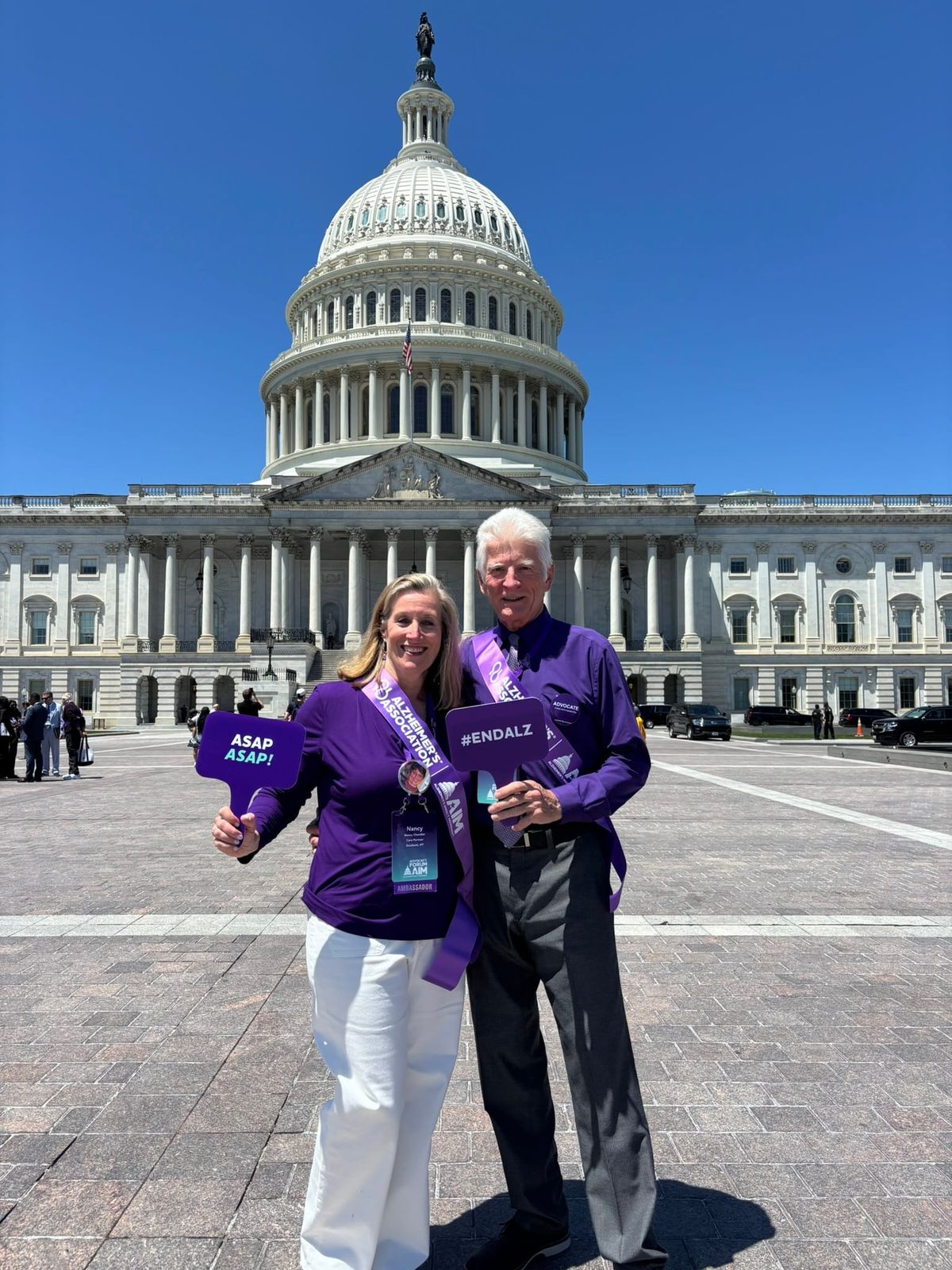
I am a volunteer advocate for the Alzheimer's Association. One of the bills we are advocating for is called the AADAPT Act. Primary care physicians are not dementia specialists, and most report they do not feel prepared to provide care for those diagnosed. This act would provide grants for structured Alzheimer’s and dementia virtual education programs to address the knowledge gaps and workforce capacity issues primary care providers face. The AADAPT Act unanimously passed the U.S. House of Representatives in July 2026, and we hope the Senate will do the same.
This legislation is important to me because of the experience I had with my mother not getting the early referrals she needed from her primary care physician. As a volunteer advocate with AIM, I've seen the positive impact our voices can have. The AADAPT Act is important to me because my mother's primary care physician did not address my mother's cognitive decline until our family was at a moment of crisis.
The AADAPT Act would make it easier for people to get an accurate and early diagnosis without having to go through invasive and costly tests. AIM’s Annual Advocacy Forum happens on a single day. We all meet with our congresspeople and senators & discuss Alzheimer's/dementia-related legislation and increases to research funding at the National Institutes of Health (NIH). It's a very powerful experience.
The second bill we are advocating for is the ASAP Act which would create a pathway for FDA-approved, blood-based early detection screening tests for Alzheimer's disease and related dementias. This bill currently has 220 bipartisan cosponsors in the House and 52 in the Senate. Last month, the House Energy & Commerce Health Subcommittee had a hearing where ASAP was discussed and it was unanimously passed out of the House Ways & Means Committee. These are major steps forward. We are encouraging Senate leadership to bring this legislation to a vote.
Q: Do you have any advice for caregivers?
Caregiving really puts a strain on individuals. Caregivers can’t do it on their own. They can’t do it alone. That is the most important thing to know. I didn’t know anything about caregiving when I first started caregiving for my mom. Now, I feel so much more knowledgeable and confident. Caregivers are very hard on themselves. Many may think they are doing it wrong. Be kind to yourself. You are doing your best every single day.
This Q&A has been edited for length and clarity.
For more information:
- Visit the Alzheimer's Association website. Call the Alzheimer’s Association 24/7 helpline at 800-272-3900 or visit their website at alz.org. A first step is to always talk to a trusted healthcare provider.
- Visit the Alzheimer's Impact Movement (AIM) website
- Read and listen to more Health Nation coverage of John Chandler.
- Read more Health Nation coverage on Nancy Chandler's caregiving journey before and after her mother was diagnosed with Lewy Body Dementia.
- Read additional local news coverage on Nancy Chandler's volunteering and advocacy.
Medical Disclaimer
All content available on and through Health Nation Media is for informational purposes only. Such content is not an endorsement of, or a substitute for, nor does it replace, professional medical or veterinary advice, diagnosis, or treatment. If you have any concerns or questions about your or others' health or the content available on or through Health Nation Media, consult with a healthcare professional. Do not disregard, avoid, or delay obtaining health-related advice from a healthcare professional because of content available on or through Health Nation Media. Use of Health Nation Media and reliance on any Health Nation Media information is solely at your own risk. For more details, see Health Nation Media's Terms of Use.