
When a loved one has Lewy Body Dementia: Caregiving after crisis
Nancy Chandler had recently moved back to Long Island, N.Y., and noticed a change in her mother. She was much more anxious, became easily overwhelmed, and kept repeating herself.
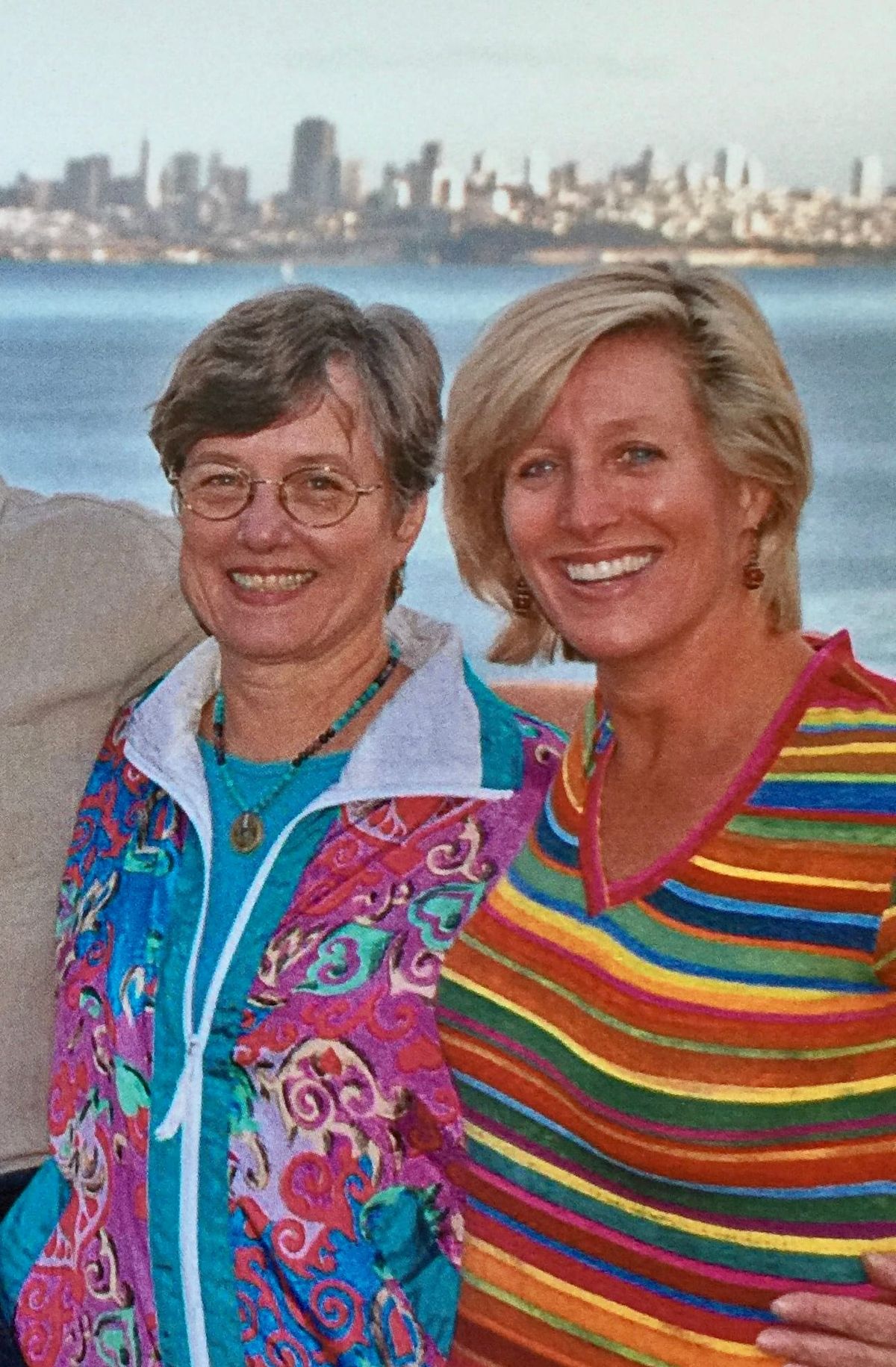
When Nancy Chandler moved back to New York after temporarily living out of state, she started seeing her mother Carol LeGrow a lot more frequently. That’s when Chandler started realizing that her mother, then 73, was not the same.
“I had recently moved back to Long Island and noticed a change in my mother. She was much more anxious, became easily overwhelmed, and kept repeating herself. She had always loved to cook, but seemed to be losing interest. In fact, she once started making dinner, put a pot on the stove, and then went upstairs and forgot about it, nearly causing a house fire,” Chandler recalled.
“Something was not right,” said Chandler. She started to see other signs her mother’s personality had changed in small, imperceptible ways. “Before the diagnosis, my mom was an outgoing, active, and creative person. She loved to dance,” Chandler said.
Originally from Queens, New York, Carol LeGrow, Chandler’s mother, had lived on Long Island for decades raising her family, while helping to run a family business.
“My mom's love of boating started with her spending her summers on Greenwood Lake, N.Y., with her parents. She loved to waterski, and decided to buy her own 18-foot powerboat at the age of 19, so she and her friends could waterski,” Chandler said.
LeGrow shared her love of boating and waterfront leisure time once she started her own family, Chandler said. “Growing up, we would drive to Robert Moses every Saturday and Sunday and spend the entire day at the beach with her aunt, uncle, and cousins,” Chandler said. In addition to boating, among other activities, LeGrow loved crafting, needlework, cooking, gardening and spending time with with her relatives and doting on her cats.
That’s why it was such a surprise to Chandler in 2013 when her mother left cooking on the stovestop unattended. LeGrow seemed to frequently get confused, Chandler said.
After Chandler took her mother to a few primary care medical appointments, she became dissatisfied with her mother’s care. According to Chandler, her mother’s primary care physician hadn’t shared any kind of diagnosis with Nancy, or other relatives.
“I had gone with my mom to one or two appointments. I immediately saw the doctor was just prescribing all of these medications, as opposed to trying to uncover what was going on,” she said.
Chandler said her mother's primary care physician continued to prescribe higher and higher dosages of antidepressants, anti-anxiety medications, combining different kinds of strong psychiatric medications. According to Chandler, the sheer number of the medications meant to treat issues with depression and anxiety gave Chandler pause; she was worried about the potential for overmedication. Over time, Chandler’s mother’s personality and temperament changed even more, something Chandler believes had a direct correlation to the strong psychiatric medications her mother had been prescribed.
“Things were just getting worse,” said Chandler.

Chandler’s experience is quite common, like many who are suddenly thrown into caregiving roles for aging parents after memory issues or behavioral changes present themselves.
One day, Nancy Chandler received some distressing news about her mother.
“I received a call from my mother's neighbor to tell me that my mother had a violent episode at home. The neighbor felt I should come to take my mother to the ER,” said Chandler, who lived a short driving distance away from her mother’s home.
“I had [already] made an appointment with a geriatrician. Unfortunately, my mom's episode at home resulting in her hospitalization happened before she saw the geriatrician,” Chandler recalled.
While it is not clear exactly what happened in LeGrow’s situation, according to Chandler, LeGrow was inside her home when she physically attacked a relative who she had known for decades. Nothing physical had ever happened like this before According to Chandler, LeGrow had not yet been diagnosed with Lewy Body dementia, so no one knew what was happening.
Lewy Body Dementia sometimes progresses faster as compared with Alzheimer’s disease. While every individual case varies, the life expectancy of an individual with Lewy Body Dementia can range up to 8 to 10 years after diagnosis. According to medical and mental health experts, it is possible that LeGrow may have thought she had to defend herself from a stranger who was trespassing, because of auditory or visual hallucinations that can come and go. Some mental health experts, believe that putting patients on certain anti-psychotics medications can make Lewy Body Dementia symptoms significantly worse, as was the case with Nancy Chandler’s mother.
“After waiting hours in the ER, my mom started getting very agitated and confused. Without understanding what was causing her behavioral issues, [hospital staff] put [my mother] into the psychiatric ward where we were not permitted to have contact with her for at least 24 hours,” Chandler recalled.
The emergency room staff physically restrained LeGrow and put uncomfortable restraints on her which made the entire situation worse, said Chandler. LeGrow was hysterical trying to understand what had happened, Chandler said, based on information her mother shared with her later.
“It was very traumatic for both her and us.”
“I ended up having to take a leave of absence from my job, because just putting all the pieces in place for her, getting her the right doctor, getting her home health care financially and figuring out the ‘How are we going to pay for that’ type questions” she said.
“I literally spent pretty much every day going to her house, helping her with things, meeting with lawyers, meeting with the doctor, just trying to wrap my arms around what we were dealing with,” said Chandler.
After being discharged from the psychiatric hospital, and seeing several specialists, Chandler was finally able to get a diagnosis for her mother: Lewy Body Dementia. It is the second most common form of dementia, after Alzheimer’s disease. Like Alzheimer’s, there is no cure for Lewy Body Dementia.
In a situation that is quite common among individuals with Lewy Body Dementia, some individuals may become disoriented and either not recognize their loved ones or experience hallucinations leading some to believe they have to fight to be safe. Standardized medical treatment plans for Lewy Body hallucinations are still emerging which no widespread consensus among medical and mental health professionals, according to some online medical resources and research.
According to an online explainer provided by the Lewy Body Resource Center, there are actually two forms of Lewy Body. “If thinking and memory problems develop first, or show up around the same time as movement issues, doctors call it Dementia with Lewy Bodies (DLB). If movement problems like tremor or stiffness appear first and thinking changes come later, they call it Parkinson’s Disease Dementia (PDD).”
Some noted high-profile individuals (or their family members) have publicly shared a Lewy Body diagnosis, including Robin Williams (comedian and actor); Charles Schulz (The Peanuts comic artist behind Snoopy and Charlie Brown); Ted Turner (CNN founder); Estelle Getty (Golden Girls actor); Johnny Cash (singer); Perry Como (singer); Casey Kasem (radio host, voice actor and disc jockey); Stan Mikita (Chicago Blackhawks ice hockey player); Jerry Orbach (actor known for Law & Order) and Dick Clark (television host and producer.)
With Lewy body, memory loss can come and go in an unpredictable way. According to experts, visual or auditory hallucinations are very common early signs when individuals age in place with Lewy Body Dementia, as was the case with Carol LeGrow, Nancy Chandler’s mother.
From Chandler’s recollection, even with specialist support, following her mother’s diagnosis, there were no medications or significant treatment options available to her mother back in 2013 following her diagnosis. In recent years, Alzheimer’s has some new treatment options to slow down symptoms; there have not yet been any corresponding treatment breakthroughs for Lewy Body Dementia treatment.
According to Chandler, after her mother's diagnosis, together with other family members, they worked on a plan to allow LeGrow to age in place within her Long Island home. Ultimately, following worsening health issues, Chandler and her siblings made the decision to transition her mother to a memory care unit for more support.

“When she was in the later stages of her disease, I would ask her about her time on Greenwood Lake and her boat, and she would perk up with a smile,” Chandler said. Before she lost her ability to speak, she would tell me the name of her boat.”
“She passed away just before her 78th birthday, so she lived with the disease [Lewy Body Dementia], just about five years,” Chandler said.
After the loss of her mother, Chandler decided she wanted to give back. That's why Chandler decided to get involved with the Alzheimer’s Association, she said. Chandler said she finds purpose today in helping others, by providing information, education, training and facilitating caregiving and other support groups.
For more information on Lewy Body Dementia and Health Nation articles and interviews on dementia and aging in place:
- Visit Alzheimers.gov for information specific to Lewy Body.
- Visit the Alzheimer's Association website for information specific to Lewy Body.
- Visit the Lewy Body Dementia Association for more information.
- Read a Health Nation interview with Nancy Chandler's starting her second caregiving journey after her husband was diagnosed with Mild Cognitive Impairment (MCI), in 2024.
- Read additional local news coverage on Nancy Chandler’s volunteering and advocacy.
Medical Disclaimer
All content available on and through Health Nation Media is for informational purposes only. Such content is not an endorsement of, or a substitute for, nor does it replace, professional medical or veterinary advice, diagnosis, or treatment. If you have any concerns or questions about your or others' health or the content available on or through Health Nation Media, consult with a healthcare professional. Do not disregard, avoid, or delay obtaining health-related advice from a healthcare professional because of content available on or through Health Nation Media. Use of Health Nation Media and reliance on any Health Nation Media information is solely at your own risk. For more details, see Health Nation Media's Terms of Use.